Let’s talk about microlearning. It’s often described as quick, snackable, and easy to consume. All true. But those descriptions also lead to one big misunderstanding: people think microlearning is defined by being short.
That’s only part of the story.
The real strength of microlearning is precision. It delivers exactly what someone needs to complete a task, build a skill, or make a decision—no extra content, no wandering topics, no wasted time. That distinction matters more than ever in a workplace filled with AI tools, constant updates, and very little patience for anything that doesn’t feel immediately useful.
So let’s clear up a few myths.
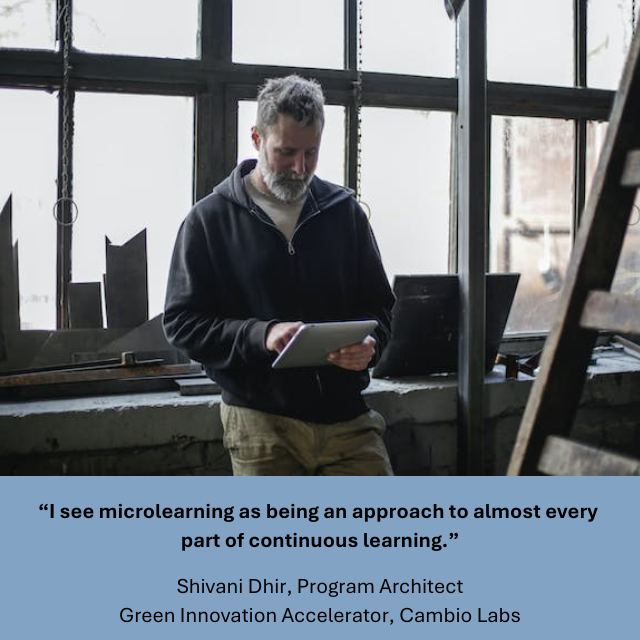
Thanks to platforms like YouTube, TikTok, and internal training libraries full of “quick clips,” microlearning often gets reduced to video content.
Video is just one option. Microlearning can take many forms:
What matters is the focus. Each piece targets a single outcome, making it easier to apply immediately. Studies show microlearning can significantly boost engagement and retention when designed well. In one survey, learners in game-based training reported an 83 percent boost in motivation compared to traditional methods. After completing microlearning, 78 percent of employees felt more confident in their jobs.
Short videos alone don’t create that kind of impact. Focused, purposeful design does.
A technician scans a QR code on a machine and gets a two-minute interactive guide on recalibrating a sensor. No intro, no theory, just the steps needed to fix the issue right now.
If something only takes a few minutes, it must be basic.
Microlearning handles complex topics by breaking them into usable pieces.
Instead of delivering everything at once, it structures learning into focused steps over time. This approach aligns with how people retain information and apply it on the job. Research shows microlearning can improve retention by 50 percent compared to traditional eLearning.
In modern workplaces, complexity continues to grow. New systems, compliance requirements, and AI-driven workflows require ongoing learning. Microlearning supports that by delivering content in clear, manageable increments.
Instead of a two-hour training on a new software platform, employees receive a series of short modules:
Each module solves a specific problem at the moment it becomes relevant.
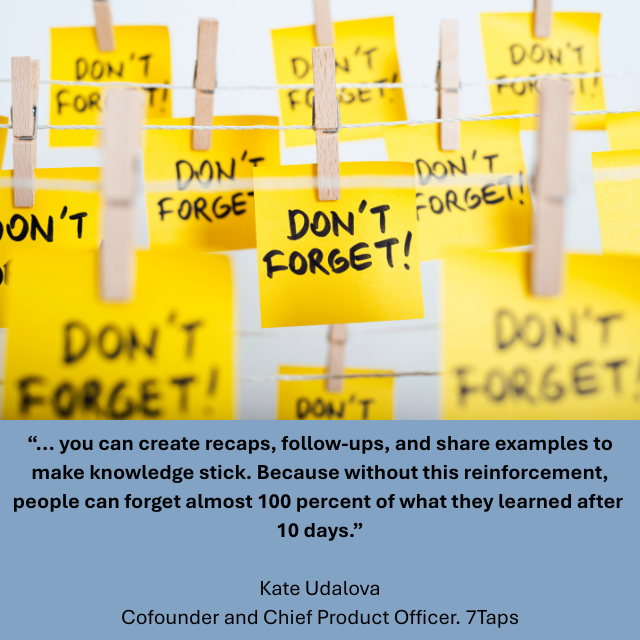
Its flexibility makes it seem like a complete substitute for longer training programs.
Microlearning works best alongside foundational training.
The bigger challenge with traditional learning isn’t length—it’s retention. The Ebbinghaus Forgetting Curve shows people forget 50 percent of new information within a day and 90 percent within a week. Microlearning helps address that drop-off by reinforcing key concepts over time, making it easier to apply what was learned.
It acts as the bridge between learning and performance.
After a full-day leadership workshop, managers receive short weekly microlearning prompts:
The training stays active instead of fading after the session ends.
Its popularity makes it feel like another passing trend.
Microlearning builds on well-established principles:
What has changed is how easily these principles can be delivered.
Modern platforms, including AI-driven systems, can now provide targeted learning based on role, behavior, and performance gaps. Learning becomes part of the workflow instead of a separate event, and learners are more likely to make an investment of a few minutes than be uncomfortable for long periods of time in training they will barely remember in a week.
An AI system detects repeated errors in a workflow and automatically assigns a three-minute corrective module to the employee. No scheduling, no delay, just immediate support.
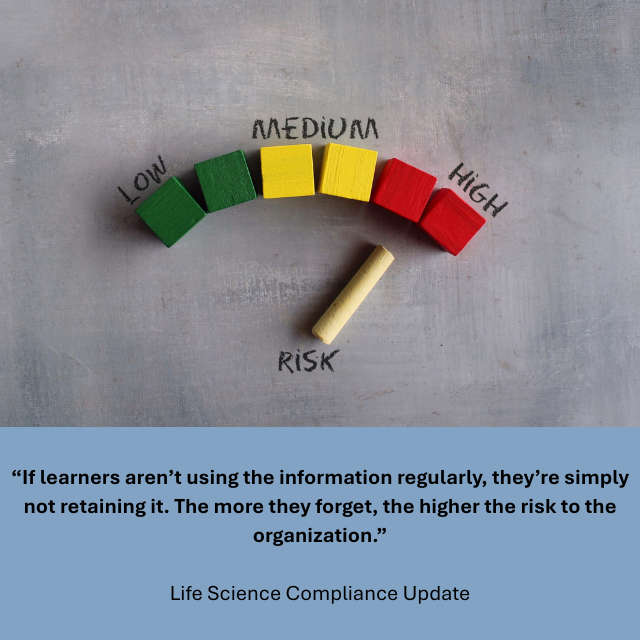
Its mobile and digital format is often associated with younger employees.
Ease of use and convenience appeal across all age groups. Research shows 72 percent of learners say mobile learning boosts engagement, regardless of age. Organizations using mobile learning have seen a 16 percent increase in productivity. That means 6.4 hours per week – 41 working days a year (about 8 weeks) – per employee that can be used for other tasks.
When learning is relevant, accessible, and easy to apply, people use it.
A senior field engineer pulls up a quick troubleshooting guide on a tablet during a site visit. No classroom, no manual, just immediate support to get the job done.
In environments where information changes quickly, long, multi-subject training can create more noise than clarity. Focused learning helps people act with confidence when it matters most.
When designed well, microlearning becomes part of how work gets done. It supports decisions, reinforces skills, and keeps knowledge current without pulling people away from their roles.
But precision does not happen by accident. It requires understanding what people actually need to do, where they struggle, and how learning can support performance in real time.
That’s where many organizations run into trouble.
Here’s the catch: microlearning only works when it’s designed with purpose.
Too often, organizations mistake activity for strategy. They create short content, push it out, and assume learning is happening. But without clear alignment to business goals, real performance gaps, and measurable outcomes, microlearning becomes just another content stream people scroll past. The problem isn’t the format, but the lack of insight behind it.
That’s where MATC Group comes in.
MATC approaches microlearning as part of a larger performance ecosystem, not a standalone tactic. That means:
Instead of more content, the focus is on smarter content. Content that supports decisions, reduces errors, and improves outcomes in real time.
Because microlearning is valuable when it helps people do their jobs better, not just because it’s short. And that’s the difference between learning that exists and learning that works.
Need it Now? Why Just In Time Learning Works (and How Microlearning Helps)
Measuring Microlearning Mastery: Metrics that Matter
Elevate Sales Excellence with Microlearning: 7 Best Practices
Apostolopoulos, Aris. “The 2019 Gamification Work Survey.” TalentLMS. 8/19/19. Accessed 4/13/26. https://www.talentlms.com/blog/gamification-survey-results
Cloke, Harry. “What is the Forgetting Curve? Definition, History & Key Strategies [2024].” Growth Engineering. 2/13/24. Accessed 4/13/26. https://www.growthengineering.co.uk/forgetting-curve
Hesse, A., P. Ospina, M. Wieland, F.A. Leal Yepes, B. Nguyen, and W. Heuwieser. “Short communication: Microlearning courses are effective at increasing the feelings of confidence and accuracy in the work of dairy personnel.” ScienceDirect. 9/16/19. Accessed 4/13/26. https://www.sciencedirect.com/science/article/pii/S0022030219306605
Horowitz, Brian T. “5 Ways to Use Microlearning as Part of Tech Training.” Dice. 3/10/23. Accessed 4/13/26. https://www.dice.com/career-advice/5-ways-to-use-microlearning-as-part-of-tech-training
Kerravala, Zeus. “A mobile-first strategy improves employee productivity, study finds.” NetworkWorld. 4/27/16. Accessed 4/13/26. https://www.networkworld.com/article/950898/a-mobile-first-strategy-improves-employee-productivity-study-finds.html
Martin, Rebecca. “How Microlearning Boosts Knowledge Retention by at least 50%.” HubSpot. Accessed 4/13/26. https://f.hubspotusercontent30.net/hubfs/2490889/E-books/How Microlearning Boosts Knowledge Retention by at least 50%25.pdf
Murphy, Sean and Lauren Barnett. “Learning After You Know It All: Enhancing Compliance Learning and Maximizing Retention.” Life Science Compliance Update. 2017. Accessed 4/13/26. https://www.nxlevelsolutions.com/compliance/assets/downloads/Learning%20After%20You%20Know%20It%20All.pdf
“The State of Mobile Learning – Asia Pacific Insights 2015.” Skillsoft. 8/18/15. Accessed 4/13/26. https://www.slideshare.net/skillsoft/the-state-of-mobile-learning-asia-pacific-insights-2015