


Disasters don’t just happen out of nowhere. Often, they are the result of human decisions, some made long before the crisis ever strikes. Sometimes it’s a breakdown in training, documentation, or leadership that turns a manageable emergency into a catastrophe. Other times, strong preparation, clear procedures, and quick decision-making prevent disaster from becoming tragedy.
Across industries and around the world, history shows us the same pattern: the way we prepare for, document, and respond to emergencies makes all the difference. By studying real-world examples, including those where protocols failed and others where planning saved the day, we can better understand what it means to be truly ready.
Organizations tend to recognize this in theory but struggle in practice. Preparation often exists in pieces—training delivered separately from documentation, procedures disconnected from real workflows, and communication that doesn’t reflect how teams actually operate. The result is a gap between what is planned and what people can execute under pressure.
Let’s look at both sides: the failures that cost lives, and the successes that saved them.
Even the most advanced systems and structures are only as strong as the people maintaining them. When documentation is ignored, training is outdated, or leadership cuts corners, small issues can snowball into tragedy.
In many cases, the breakdown isn’t a single failure. It’s a pattern of outdated information, unclear ownership, and decisions made without a shared understanding of risk. Over time, those gaps compound until the system can no longer absorb stress.
The following cases show how preventable failures—on the ground and in the air—turned emergencies into catastrophic losses.
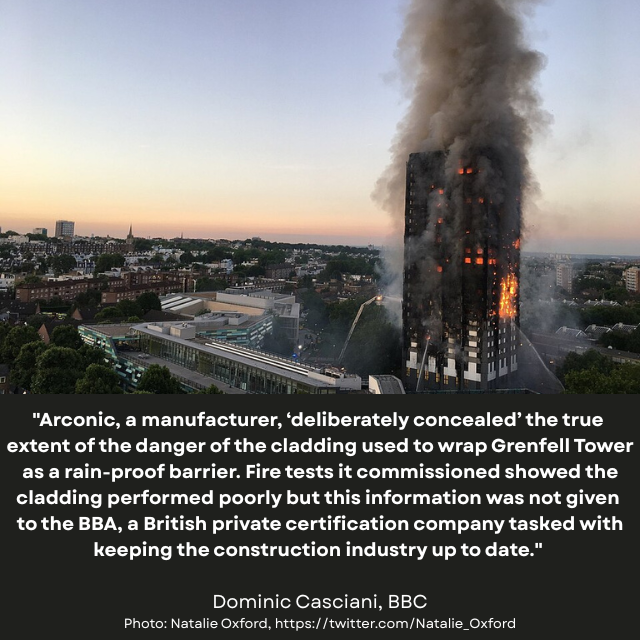
Just before 1:00 a.m. on June 14, 2017, a fire broke out in a fourth-floor apartment of Grenfell Tower, a 24-story residential building in West London. Within minutes, flames raced up the building’s exterior cladding, later revealed to be highly flammable. By 3:00 a.m., most of the upper floors were ablaze.
The disaster killed 72 people and injured dozens more. Many residents had followed the official “stay put” advice, which tragically proved deadly once the fire spread uncontrollably.
What Went Wrong
Lessons Learned
These kinds of failures are rarely about a lack of awareness. They are about a lack of alignment between what is known, what is documented, and what is acted upon. Closing that gap requires more than policies. It requires systems that ensure information moves consistently from insight to action.
If Grenfell revealed how flawed assumptions and ignored warnings can cost lives on the ground, American Airlines Flight 191 showed how similar failures in the skies can have equally devastating consequences.
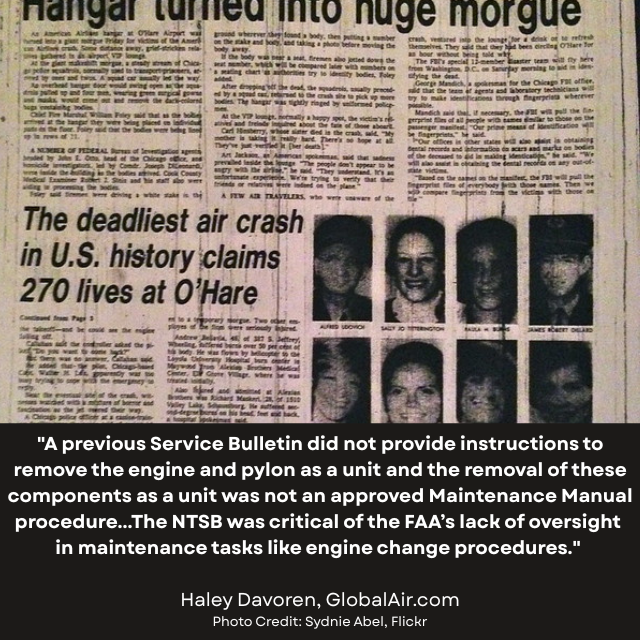
On May 25, 1979, American Airlines Flight 191, a McDonnell Douglas DC-10, took off from Chicago O’Hare. Seconds later, the left engine and pylon assembly tore away from the wing, severing hydraulic lines and causing a catastrophic roll. The plane crashed into a nearby field, killing all 271 people onboard and two on the ground.
The crash remains the deadliest single-aircraft accident in U.S. history, and it wasn’t random. Investigators found that systemic gaps in documentation, oversight, and training had allowed unsafe practices to become routine.
What Went Wrong
Lessons Learned
Many organizations face similar challenges on a smaller scale. Procedures evolve, workarounds emerge, and over time the “real” way work gets done drifts away from what is formally documented. The issue isn’t a lack of information. It’s that their documentation, training, and day-to-day operations aren’t designed to work together, making it harder for teams to execute consistently when it matters most.
After two sobering examples of what happens when documentation and leadership fail, let’s shift focus. History also gives us cases where preparation and training made the difference, turning potential catastrophes into remarkable survival stories.
Not all emergencies end in massive tragedy. When leaders invest in preparation, insist on accurate documentation, and commit to realistic training, disasters can be contained before they spiral out of control.
What separates these outcomes is not just preparation, but how well preparation is integrated into daily operations. Training, documentation, and communication reinforce each other, so when pressure rises, teams are not starting from scratch.
The following stories highlight how strong procedures, clear communication, and practiced teamwork can save lives when the stakes are highest.
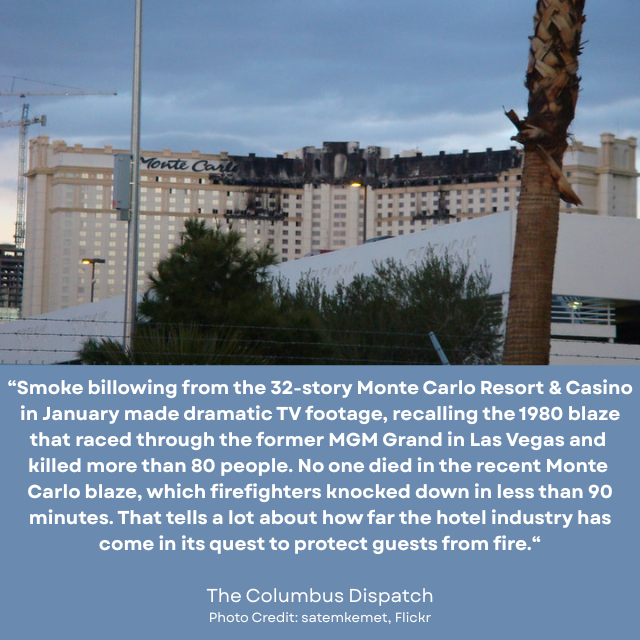
On January 25, 2008, flames erupted on the roof of the 32-story Monte Carlo Resort and Casino (now Park MGM) on the Las Vegas Strip around 11:00 a.m. At the time, it was determined that sparks from an ongoing welding project ignited foam and plastic materials used in the building’s decorative exterior. Later reports claim the exterior wall cladding did not meet the building code at the time of original construction.
The fire spread rapidly down the façade, sending plumes of black smoke high above the city. Approximately 6,000 people were evacuated in 30 minutes, and while damage was significant, the swift response of first responders and hotel staff prevented fatalities. The fire ultimately caused around $100 million in damage and forced the resort to close for several weeks.
What Went Right
Lessons Learned
This kind of response doesn’t happen in the moment. It reflects systems that were built and reinforced over time, where expectations are clear, information is accessible, and teams understand how to act without hesitation.
If the Monte Carlo Resort and Casino showed how preparation can guide thousands of people to safety on the ground, Qantas Flight 32 proved that the same principles apply at 30,000 feet – with even higher stakes.
![Severely damaged airplane engine. Caption reads: “You first identify the threats and then you try to stop them. If you can’t stop them then you try to fix them. If you can’t fix them then you mitigate them. At the end of the ECAM [Electronic Centralised Aircraft Monitoring] process, you know what systems have failed and you should have a mental model of the state of the airplane, how it will respond and how you’re going to manage it.” -Caption Richard Champion de Crespigny, Qantas Flight 32](https://www.matcgroup.com/wp-content/uploads/2026/04/Qantas-Flight-32.png)
On November 4, 2010, Qantas Flight 32, an Airbus A380 bound for Sydney, suffered a catastrophic engine explosion shortly after takeoff from Singapore. Shrapnel tore through the wing, disabling hydraulics, fuel lines, and flight controls. The pilots faced 21 compromised aircraft systems – out of a total of 22.
Yet the crew stabilized the plane, dumped fuel, and returned safely to Changi Airport with all 469 passengers and crew alive. The crew turned one of the most catastrophic engine failures ever into one of the most remarkable feats of aviation crisis management in modern history.
What Went Right
Lessons Learned
High-performing teams rely on more than expertise. They rely on shared understanding built through consistent training, clear communication, and well-structured knowledge—so when the unexpected happens, teams can respond with confidence instead of hesitation.
These events reveal a hard truth: preparation, training, documentation, and leadership are never optional when lives are on the line. Across every example, one pattern stands out: Outcomes are shaped long before the crisis itself, by how well organizations connect training, documentation, leadership, and communication into a system that holds up under pressure.
Turning preparation into real-world performance requires more than policies or one-time training. It takes systems that connect documentation, learning, and operations in ways that people can actually use. MATC Group focuses on building those systems—practical, measurable, and designed to hold up under real conditions, not just in theory.
By prioritizing training, accountability, documentation, and leadership at every level, organizations can build the kind of resilience that performs under pressure when the unexpected inevitably happens.
Can’t make it to CLO Exchange Austin? Contact us today, or talk with us at several upcoming events:
Training, Protocols, Leadership: What Separates Catastrophe from Control
Reducing Cognitive Load with Better Documentation: Lessons from I-O Psychology
Crisis Management: What Went Wrong — and Right — During Major Disasters
“About Captain Evans.” Captain Speaking. Accessed 4/2/26. https://www.captainspeaking.com.au/about
“American Airlines plane crashes in Chicago, killing all aboard.” History. 5/27/25. Accessed 4/2/26. https://www.history.com/this-day-in-history/may-25/dc-10-crashes-killing-all-aboard
“Blaze at Monte Carlo on the Las Vegas Strip.” NBC News. 1/25/08. Accessed 4/2/26. https://www.nbcnews.com/id/wbna22844444
Casciani, Dominic. “Grenfell Report: Key findings from the inquiry.” 9/4/24. Accessed 4/2/26. https://www.bbc.com/news/articles/c049yvrd5qxo
“Changes have made hotel fires less of a threat.” The Columbus Dispatch. 2/23/08. Accessed 4/2/26. https://www.dispatch.com/story/lifestyle/travel/2008/02/24/changes-have-made-hotel-fires/23651534007
Clark County Firefighters Local 1908. “Reflecting on the Monte Carlo Fire: A Day of Heroism and Teamwork.” Facebook. 1/25/25. Accessed 4/2/26. https://www.facebook.com/ProudToRescueClarkCounty/posts/reflecting-on-the-monte-carlo-fire-a-day-of-heroism-and-teamworkon-this-day-in-2/1025039399664613
Davoren, Haley. “45 years later — American Airlines Flight 191.” GlobalAir. 5/28/24. Accessed 4/2/26. https://www.globalair.com/articles/45-years-later-american-airlines-flight-191?id=7462
Gorman, Tom. “From the inside: How they coped.” Las Vegas Sun. 1/26/08. Accessed 4/2/26. https://lasvegassun.com/news/2008/jan/26/inside-how-they-coped
Greenberg, Lisa. “Maintenance shortcut leads to country’s deadliest plane crash.” 9/15/04. Accessed 4/2/26. https://www.plantservices.com/home/article/11345093/the-ultimate-cost-of-convenience
“Grenfell Tower Inquiry Phase 2: Annual Report February 2026.” Gov.UK. 3/2/26. Accessed 4/2/26. https://www.gov.uk/government/publications/grenfell-tower-inquiry-government-annual-report-february-2026/grenfell-tower-inquiry-phase-2-annual-report-february-2026
Hagen, Jan U., Zhike Lei, and Avner Shahal. “What Aircraft Crews Know About Managing High-Pressure Situations.” Harvard Business Review. 12/9/19. Accessed 4/2/26. https://hbr.org/2019/12/what-aircraft-crews-know-about-managing-high-pressure-situations
Maloney, Robert. “From the Fire Engineering Vault: MGM Grand Fire/Monte Carlo Fire.” Fire Engineering. 11/20/13. Accessed 4/2/26. https://www.fireengineering.com/firefighting/from-the-fire-engineering-vault-mgm-grand-fire-monte-carlo-fire
Mann, Ross F. “The Five Deadliest Airplane Accidents in the U.S.” Ross Mann. 5/6/25. Accessed 4/2/26. https://www.rossmannlaw.com/blog/the-five-deadliest-airplane-accidents-in-the-u-s
“Qantas grounds A380s after Singapore emergency landing.” BBC. 11/4/10. Accessed 4/2/26. https://www.bbc.com/news/world-asia-pacific-11691197
“QF32 and the black swan.” Flight Safety Australia. 3/3/16. Accessed 4/2/26. https://www.flightsafetyaustralia.com/2016/03/qf32-and-the-black-swan
“Report Cites Building Materials in Monte Carlo Fire.” Commercial Property Executive. 9/2/08. Accessed 4/2/26. https://www.commercialsearch.com/news/report-cites-building-materials-in-monte-carlo-fire
Shorrock, Steven. “QF32: How It Went Right.” Skybrary.aero. Winter 2019-2020. Accessed 4/2/26. https://skybrary.aero/sites/default/files/bookshelf/5383.pdf
“System Failure Case Studies: Deadly Efficiency.” NASA. July 2010. Accessed 4/2/26. https://sma.nasa.gov/docs/default-source/safety-messages/safetymessage-2010-07-11-americanairlinesflight191.pdf
“Today marks 44 years since devastating fire at MGM Grand killed 87 people, injured 600 others.” KTNV Las Vegas. 11/22/24. Accessed 4/2/26. https://www.ktnv.com/news/today-marks-44-years-since-devastating-fire-at-mgm-grand-killed-87-people-injured-600-others
Visual Journalism Team. “Grenfell Tower: What happened.” BBC. 10/29/19. Accessed 4/2/26. https://www.bbc.com/news/uk-40301289