

Most organizations say they want open communication. Fewer actually create the conditions where people feel safe enough to speak up. That gap is where problems grow.
Employees hesitate to ask questions. Concerns go unspoken. Mistakes get hidden instead of addressed. Over time, what looks like a communication issue is something deeper: a lack of psychological safety.
Psychological safety is not about comfort or avoiding accountability. It is about creating an environment where people can contribute, question, and challenge without fear of embarrassment, punishment, or being ignored.
And in today’s workplace—especially with constant change, new technologies, and distributed teams—that environment is essential to operational success.
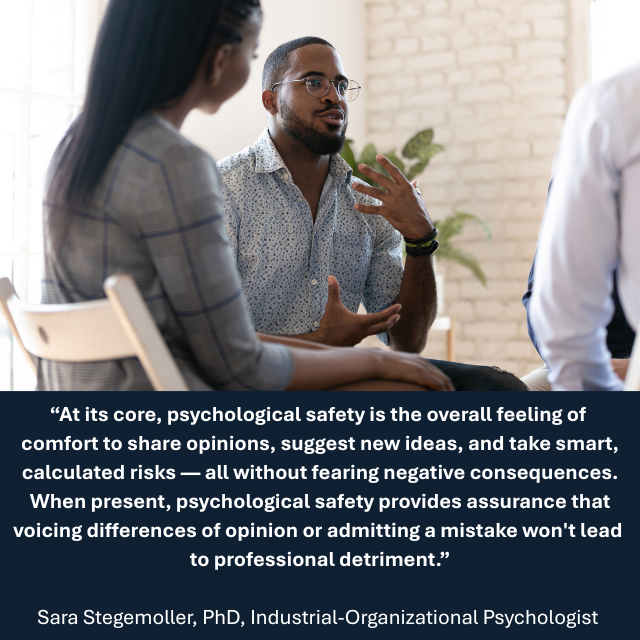
Psychological safety is often misunderstood as “being nice” or avoiding conflict. In reality, it is the opposite of silence, not the absence of tension.
A psychologically safe workplace allows people to:
When those behaviors are present, organizations learn faster. When they are not, organizations repeat the same mistakes quietly.
When psychological safety is missing, the impact is rarely immediate. It builds slowly, showing up in ways that are easy to overlook at first.
You might see:
These are not personality issues. They are system issues. Research from Perceptyx reveals a disconnect in how psychological safety is experienced. While 87% of executives believe psychological safety is strong, only 69% of individual contributors and 66% of hourly workers agree. What feels like open communication at the top often feels like hesitation on the front lines.
The impact is not just operational. It can show up in physical safety outcomes as well.
In many cases, organizations respond by adding more meetings or more messaging. But without the right structure, those efforts do not solve the underlying problem.
This is where clear documentation, structured training, and accessible knowledge systems become critical. They reduce ambiguity and give employees a foundation to engage with confidence—something MATC Group often helps organizations design and implement.
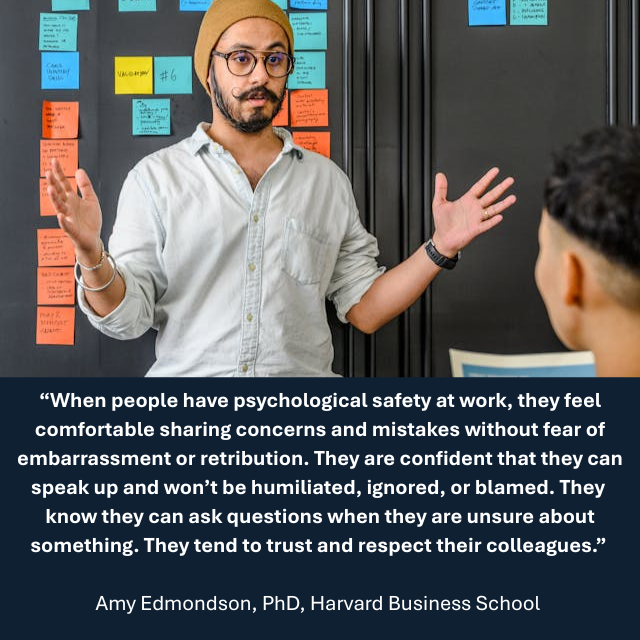
The modern workplace is faster, more complex, and more distributed than ever. (See How to Build a Change-Ready Organization.)
Employees are navigating:
In that environment, silence is costly:
Psychological safety turns uncertainty into dialogue. Without it, uncertainty turns into friction.
Low psychological safety does not just impact performance. It impacts people.
When employees do not feel safe asking questions, raising concerns, or admitting uncertainty, stress increases. Over time, that pressure compounds into burnout, disengagement, and mental fatigue.
The cost is significant. Work-related stress is estimated to cost companies more than $300 billion annually in absenteeism, presenteeism, and healthcare expenses.
This is not separate from psychological safety. It is a direct result of environments where uncertainty is hidden instead of addressed. (See Documentation: The Unsung Hero of Crisis Prevention and Recovery.)
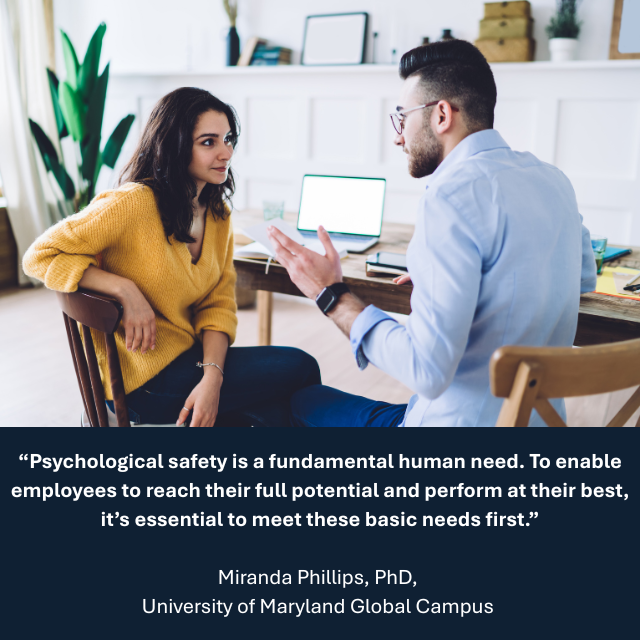
Leaders set the tone, whether they intend to or not.
Psychological safety is built through consistent behaviors, not one-time statements.
If leaders only hear from the same voices, others will stay silent.
Silence does not mean agreement. It often means hesitation.
How leaders react to mistakes defines whether employees speak up next time.
If the first response is frustration, the next issue will stay hidden longer.
Unclear expectations increase risk and reduce confidence. Leaders can reduce that friction by ensuring:
When employees know where to find answers, they are more likely to ask better questions.
This is a common gap MATC Group addresses, helping organizations build documentation and learning systems that support clarity instead of confusion. (See Crisis-Ready Learning: Training for Calm When Systems Fail.)
Psychological safety is reinforced when questioning is expected, not exceptional.
The goal is not to eliminate disagreement. It is to make it productive.
Psychological safety is not only a leadership responsibility. Teams shape it together.
Waiting to “figure it out” often leads to bigger problems later.
Asking early:
Knowledge gaps grow when information stays siloed.
Strong knowledge management practices make psychological safety easier to sustain because information becomes a shared resource, not a personal advantage.
How peers respond matters just as much as leadership behavior.
Psychological safety is visible in how teams respond to each other, not just how they respond to leaders.
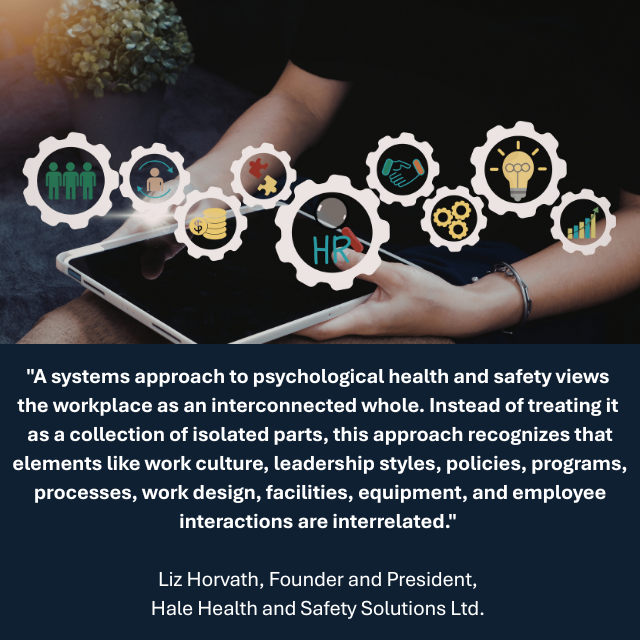
Culture is often described as “how we do things,” but it is reinforced by what we build. Psychological safety does not scale through intention alone. It scales through systems.
Organizations that sustain psychological safety typically have:
Without those systems, even well-intentioned leaders struggle to maintain consistency.
This is where many organizations encounter friction. They want open communication, but their processes, tools, and documentation do not support it.
MATC Group works with organizations to align documentation, training, and knowledge management with how people actually work, making it easier for employees to engage, contribute, and raise concerns without hesitation.
Psychological safety is often framed as a cultural goal. In reality, it is an operational requirement.
Organizations do not become psychologically safe because they encourage people to speak up. They become psychologically safe because they build environments where speaking up leads to clarity, action, and improvement.
That requires more than intent. It requires structure:
Because the data tells a consistent story:
Without systems to support clarity, those gaps widen.
With them, organizations create environments where people contribute fully, risks are surfaced early, and change becomes easier to navigate.
That is not just better culture. It is better performance. And it is exactly where the right combination of technical writing, instructional design, and knowledge management—areas where MATC Group specializes—can turn a common workplace challenge into a lasting advantage.
Can’t make it to CLO Exchange Austin? You can talk with us at several upcoming events:
Should Mental Health Training be Part of Management Development?
How Mental Health can Make or Break Your Business in a Crisis
Leading Through the Storm: Emotional Intelligence in Crisis Leadership
Horvath, Liz. “Why a Systems Approach to Psychological Health and Safety is Fundamental for Your Organization’s Implementation Strategy.” Opening Minds. 9/25/24. Accessed 3/23/26. https://openingminds.org/blogs/why-a-systems-approach-to-psychological-health-and-safety-is-fundamental-for-your-organizations-implementation-strategy
“Psychological safety in the changing workplace.” American Psychological Association. June 2024. Accessed 3/23/26. https://www.apa.org/pubs/reports/work-in-america/2024/psychological-safety
Stegemoller, Sara, PhD. “The Psychological Safety Gap: Why 30% of Employees Stay Silent.” Perceptyx. 6/17/25. Accessed 3/23/26. https://blog.perceptyx.com/the-psychological-safety-gap-why-30-of-employees-stay-silent
Walker, Jason, PsyD, PhD. “How to Establish Psychology Safety At Work: Tips for Leaders.” Forbes. 10/1/24. Accessed 3/23/26. https://www.forbes.com/sites/jasonwalker/2024/10/01/how-to-establish-psychology-safety-at-work-tips-for-leaders
“Workplace Stress.” Center for Workplace Mental Health. Accessed 3/23/36. https://workplacementalhealth.org/Mental-Health-Topics/Workplace-Stress