
For years, instructional designers (IDs) were often seen as the people who “made the training.” They built courses, designed slides, wrote scripts, and turned subject matter expertise into structured learning materials.
That work still matters. But it’s no longer enough.
Today, (ID) is evolving from a production-focused role into a strategic one. The profession is moving from content creation to learning architecture — and the difference is reshaping how organizations view learning and development.
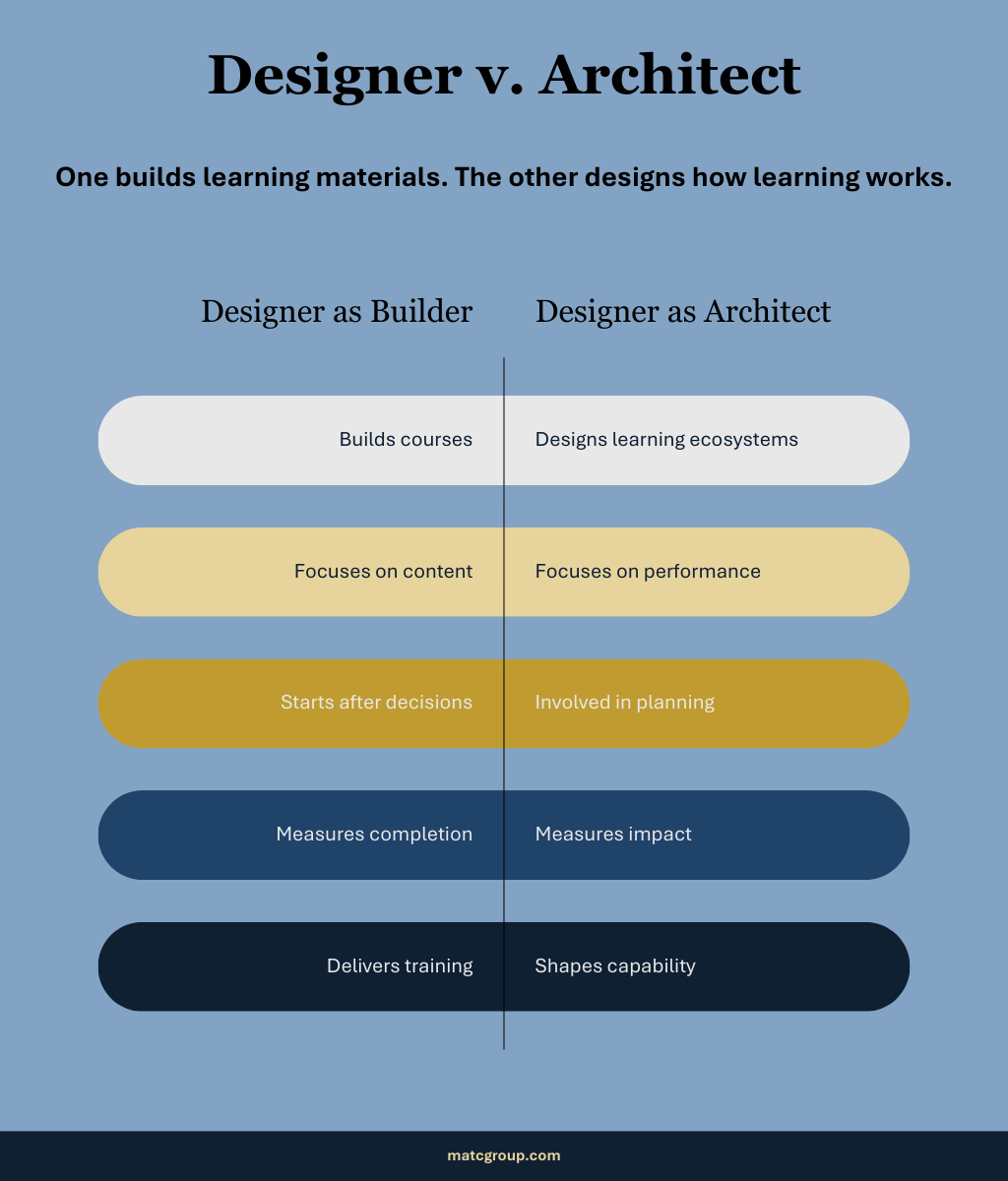
Both roles care about learning. The difference lies in scope, influence, and impact.
Traditionally, IDs have been responsible for:
This role focuses on what gets built and how it’s delivered.
Learning architects operate at a higher level. They still understand content design, but their focus expands to:
This role focuses on why learning exists, where it fits, and what it changes.
One creates learning assets. The other designs learning strategy.

Several forces are pushing ID in this direction.
Organizations are no longer satisfied with completion rates and smile sheets. Leaders want to see how learning affects performance, productivity, quality, and risk. IDs who can connect learning to outcomes become strategic partners, not order takers.
Employees can Google almost anything. The value of ID is no longer just packaging information — it’s structuring experiences, systems, and support that help people apply knowledge on the job.
Static training alone cannot support continuous change. Organizations need learning ecosystems that include performance support, knowledge management, coaching, and embedded guidance. That requires architectural thinking.
New systems, processes, and strategies fail without adoption. IDs are uniquely positioned to bridge communication, training, and workflow support, making them critical players in organizational change.
This evolution is not optional. It directly affects career relevance and influence.
Designers who stay focused only on content production may find themselves:
Designers who grow into learning architects are more likely to:
The profession is not disappearing. It is expanding.
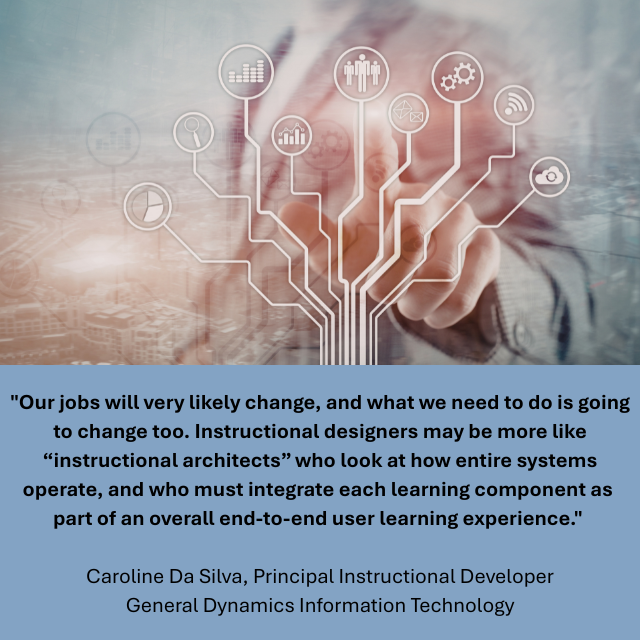
Organizations play a major role in enabling this shift.
Support training in areas such as:
Instead of measuring only outputs (courses built, hours delivered), also measure:
IDs should regularly work with:
This exposure builds architectural thinking.
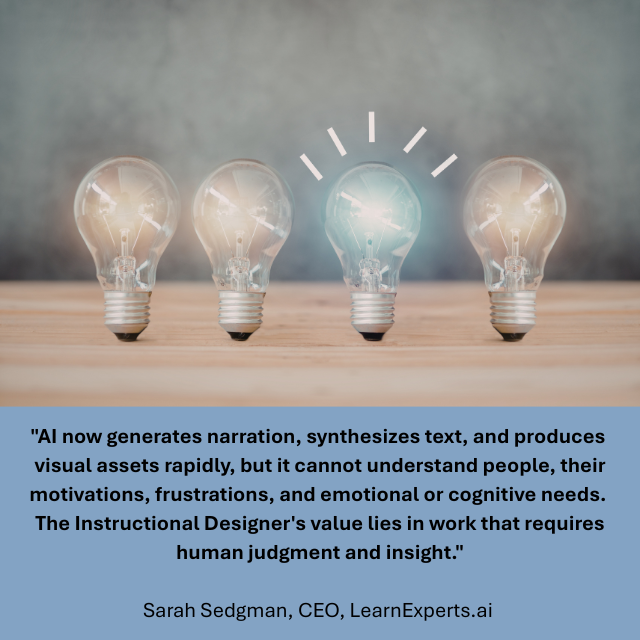
IDs don’t have to wait for permission to grow.
These areas naturally connect to learning architecture.
Move from “What course should we build?” to:
That mindset shift is the foundation of architectural thinking.
As ID becomes more strategic, there is a risk of focusing so heavily on systems, metrics, and business outcomes that the learner’s experience fades into the background. Learning architecture does not replace learner-centered design — it depends on it.
Even at the ecosystem level, designers still need to ask:
Business alignment determines why learning exists, but learner focus determines whether it works. The most effective learning architects balance organizational goals with a clear understanding of the people expected to change their behavior.
ID is no longer just about crafting learning experiences. It is about designing how people gain capability in complex, fast-changing environments. That capability still develops one person at a time, which means even the most strategic learning architecture must remain grounded in the learner’s real experience, constraints, and needs.
The most effective designers will be those who:
The profession is evolving from builders of training to designers of learning ecosystems. For IDs and organizations alike, embracing that shift is what turns learning from a support function into a strategic advantage.
Reskilling & Upskilling for 2026: What Professionals Should be Ready For
Evaluating Training ROI with Data: Why Instructional Design Must be Measurable
Data Privacy Day: Protecting Privacy in the Age of AI
Da Silva, Caroline. “Transforming From Instructional Design To Learning Experience Design.” eLearning Industry. 4/28/25. Accessed 2/3/26. https://elearningindustry.com/instructional-design-learning-experience-design
Hardman, Dr. Philippa. “Instructional Design Isn’t Dying — It’s Specialising.” Dr. Phil’s Newsletter. 4/17/25. Accessed 2/3/26. https://drphilippahardman.substack.com/p/instructional-design-isnt-dying-its
Mason, Matt. “(Opinion) The Future of Instructional Design Roles: Top 10 Reasons They May Become Obsolete AND Three Winning Strategies to ‘Weather the Storm.'” LinkedIn. 7/8/25. Accessed 2/3/26. https://www.linkedin.com/pulse/opinion-future-instructional-design-roles-top-10-reasons-matt-mason-db5le
Sedgman, Sarah. “How Instructional Designers Can Stay Relevant In The Age Of AI.” eLearning Industry. 1/2/26. Accessed 2/3/26. https://elearningindustry.com/how-instructional-designers-can-stay-relevant-in-the-age-of-ai