An employee finishes a course, downloads a certificate, and returns to the same responsibilities. Their manager is pleased they completed the training. The learning dashboard gets another green checkmark.
But what happens next?
November is National Career Development Month, an observance promoted by the National Career Development Association. It’s a useful opportunity for organizations to ask whether employees can see how learning connects to their future at work.
Career development at work becomes more meaningful when employees understand which skills they can build, where those skills could take them, and what support is available along the way. That connection also gives L&D and workforce planning teams a shared purpose: helping people grow toward work the organization needs done.
Workforce planning can sound like an exercise in headcounts and hiring forecasts. For L&D teams, it should also raise practical questions about capability.
What will employees need to do differently next year? Which responsibilities depend on expertise held by only a few people? Where could current employees grow into emerging needs?
The concern is real. In LinkedIn Learning’s 2025 Workplace Learning Report, 49% of learning and talent development professionals agreed that their executives were concerned employees lacked the skills needed to execute business strategy. That measures respondents’ perceptions of executive concern, rather than a direct assessment of employee proficiency.
The practical response starts with specificity. “Improve communication” is difficult to develop or assess. “Lead a customer handoff that clearly explains responsibilities, deadlines, and unresolved issues” gives employees and managers something concrete to work toward.
Start with a few important roles or responsibilities. Define the work, identify the necessary skills, and describe what successful performance looks like.
Employees shouldn’t need detective skills to figure out how to grow within their organization.
A useful career pathway explains the connection between current capabilities, development opportunities, and possible next steps. Those steps might include deeper technical expertise, a move into another function, project leadership, or people management.
Growth needs more than one direction. An experienced specialist shouldn’t have to become a manager simply to keep developing.
For each pathway, make a few things clear:
Be candid about what development can offer. Building skills can prepare someone for future opportunities; it doesn’t guarantee a promotion or an opening.
Once employees have a direction, they need a practical way to move toward it.
That’s where the learning ecosystem matters. Courses, knowledge resources, coaching, manager conversations, and work assignments should reinforce the same development goals.
As we explore in Beyond the LMS: Building a Learning Ecosystem That Works, workplace learning extends across connected resources and experiences. Career pathways give those connections a purpose.
Consider a customer support employee interested in quality assurance. Their development plan could combine:
Each element helps the employee prepare for a defined responsibility. The organization also gains evidence of what that person can do.
“Talk to your manager about development” is reasonable advice, provided the manager knows how to have that conversation and can support what follows.
Give managers a short discussion guide. Ask them to explore employees’ interests, identify one useful skill, agree on a practice opportunity, and schedule a follow-up.
Then address the workload.
A stretch assignment needs boundaries, support, and time. If development is simply added to an already full schedule, employees may experience it as extra work with an encouraging name.
Access matters, too. Publish opportunities and explain how employees can participate. Review whether remote staff, shift workers, and people outside highly visible teams can realistically use them.
Course completions tell you whether employees finished training. Career development also requires evidence that they can apply what they learned.
Depending on the pathway, useful measures might include:
Review the results with employees. What improved? Where is more practice needed? Does the pathway still match their interests and the organization’s needs?
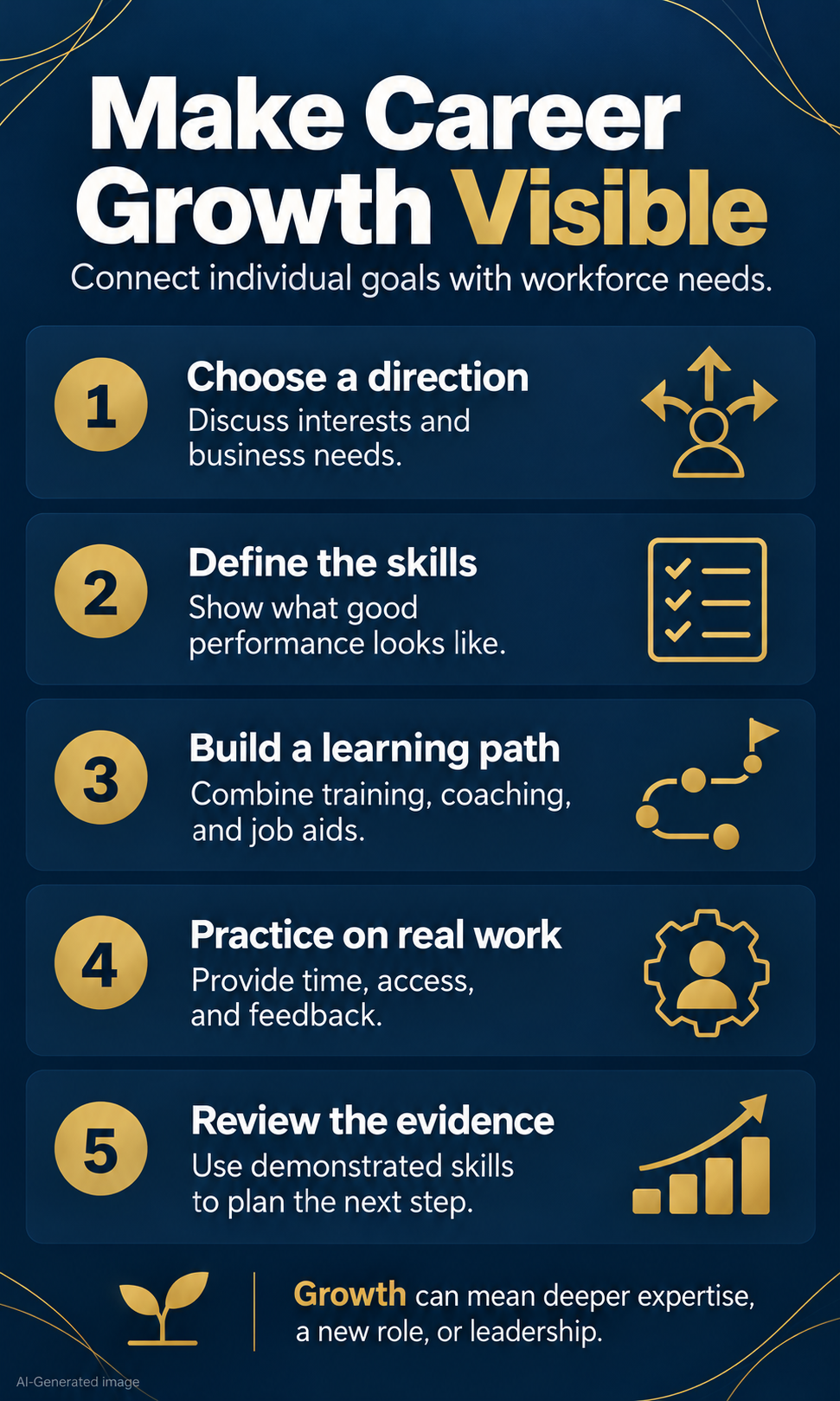
Use National Career Development Month to consider where career development fits into your next planning cycle. Choose one role or team, identify a business need, and gather employee input. Then set a realistic start date that accounts for workloads, budget decisions, and the people needed to support the effort.
Whether that means early next year or another practical window, build in time for learning, practice, feedback, and a progress review. Assign responsibility for moving the plan forward so it stays on the calendar when other priorities compete for attention.
Career development works best when employees can see opportunities to grow—and the organization makes room for them to prepare.
MATC helps organizations connect workforce strategy, learning, and knowledge resources so employees can build and apply the capabilities their work requires. Explore MATC’s workforce strategy services to bring greater clarity to your development priorities.
Beyond the LMS: Building a Learning Ecosystem That Works
Closing the Skills Gap: How Businesses Can Predict and Address Workforce Needs
First-Time Manager Training: Building Leaders, Not Just Promoting Employees
“National Career Development Month NCDA Poetry & Art Contest.” NCDA. Accessed 10/21/26. https://www.ncda.org/aws/NCDA/pt/sp/ncdmonth
“Workplace Learning Report 2025: The rise of career champions.” LinkedIn. Accessed 10/21/26. https://business.linkedin.com/learn/resources/workplace-learning-report