
Organizations are investing in AI right now for faster answers, smarter search, and better automation. And in many cases, real gains are happening. According to a 2026 report from Deloitte, 34% of companies are using AI to deeply transform their businesses, and 30% are redesigning key processes around AI.
But there is a gap that shows up quickly when using AI, especially in complex or high-pressure work. AI can surface information, but it often struggles to replicate how experienced employees interpret situations, adapt, and decide what to do next.
That gap is tacit knowledge. It is the experience-based understanding that helps people interpret, adapt, and apply processes effectively in real-world conditions.
Tacit knowledge tends to be undocumented because it is difficult to fully capture. It shows up in moments like:
These are not edge cases. They are everyday decisions that keep work moving. Most organizations have strong documentation for standard processes. Tacit knowledge fills the space between those processes and reality.
To understand the limitation, it helps to start with where AI excels. AI is highly effective when:
In these environments, AI can accelerate access to knowledge, reduce search time, and support decision-making at scale. This is valuable. It is also incomplete.
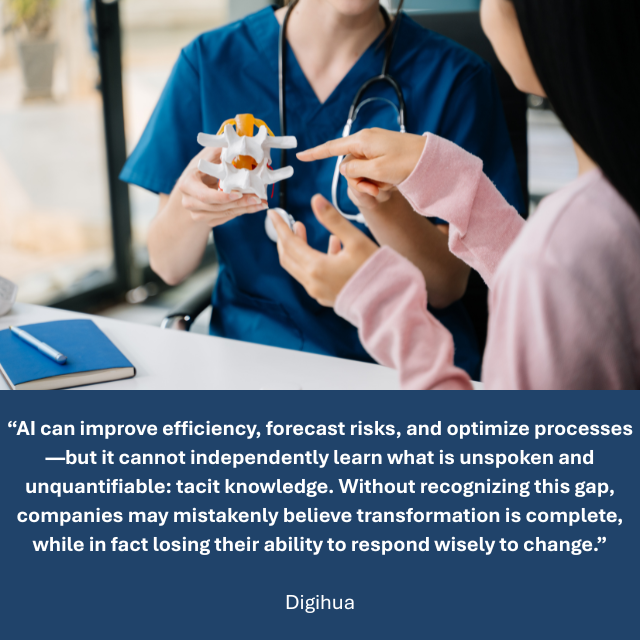
Tacit knowledge presents a fundamentally different challenge.
It is often:
AI does not “experience” situations. It processes input based on available data. If that data does not include the nuance of real-world decision-making, the output will reflect that gap.
This leads to several common issues:
In other words, AI can tell you what is supposed to happen. It is far less reliable when conditions deviate from that expectation.
The challenge is not that AI lacks value, but that organizations often apply it on top of incomplete knowledge systems.
If tacit knowledge remains uncaptured:
This is where the risk compounds. AI does not just reflect knowledge. It amplifies it. If the foundation is shallow, the scale of the problem increases.
To use AI effectively, organizations need to strengthen what AI is built on. That means capturing tacit knowledge in ways that make it usable.
At a high level, this involves:
This does not require turning experience into rigid rules. It requires making judgment visible and transferable.
It can be helpful to think about it this way:
Most organizations are strong in the first category, inconsistent in the second, and moving quickly into the third. That imbalance matters.
When AI is introduced without capturing the experience behind the work, it often performs well in routine situations but struggles when conditions change. The gap becomes visible when employees must rely on the system without the context that more experienced team members have developed over time.
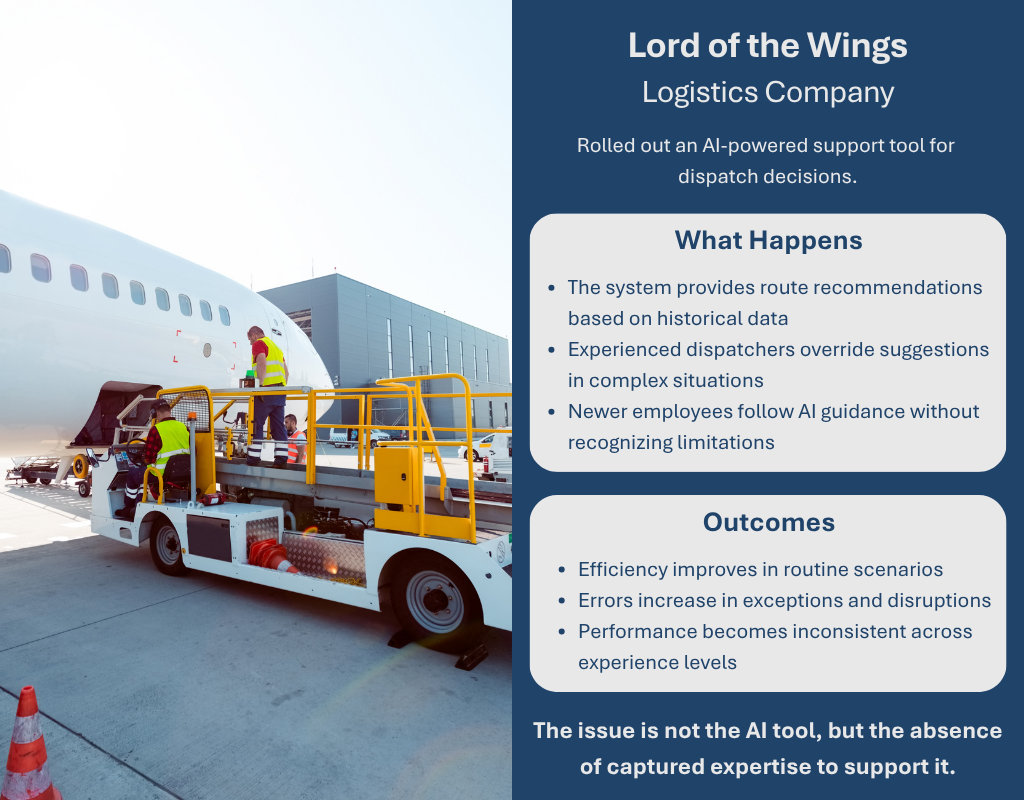
When organizations take the time to capture and structure experiential knowledge, AI becomes far more effective. Instead of replacing expertise, it reinforces it, which helps teams apply both documented processes and real-world judgment consistently.
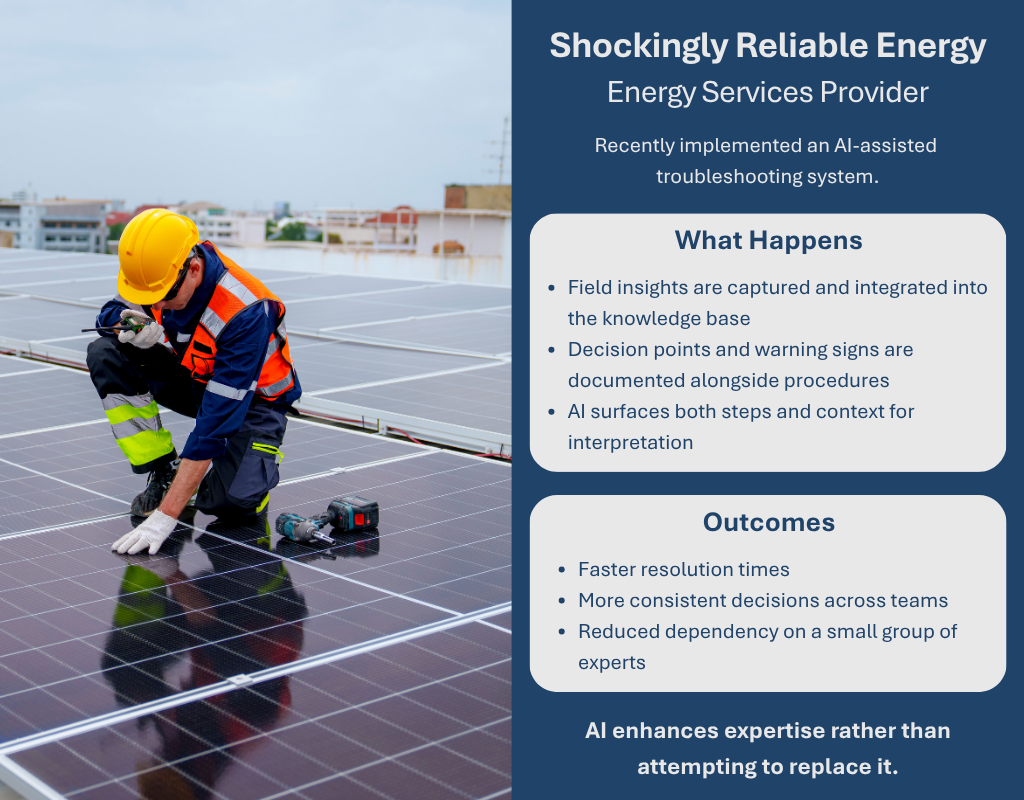
AI is changing how organizations access and use information. But it does not replace the need for deep, experience-based knowledge. In many ways, it makes that need more urgent. What an organization knows is no longer enough; the focus now is on what your systems can see, understand, and apply.
If tacit knowledge remains invisible, AI will expand processes without the benefit of real-world judgment, limiting its effectiveness where it matters most.
This is not just an AI challenge, as knowledge and performance are key to recognizing, capturing, and sharing tacit knowledge. Businesses need systems that ensure the right knowledge exists, is structured effectively, and is accessible when it matters.
MATC works with organizations to:
Simply producing more content is not the answer. MATC focuses on better outcomes for you through clearer, more accessible knowledge.
Can’t make it to CLO Exchange Boston? Contact us today, or talk with us at several upcoming events:
Documentation in the Age of AI: Why Clarity is a Competitive Advantage
Crisis-Ready Learning: Training for Calm When Systems Fail
How to Build a Change-Ready Organization: Creating a Sustainable Change Management Culture
“The Struggle for Dominance Between Tacit Knowledge and AI Thinking.” Digihua. Accessed 4/6/26. https://en.digihua.com/the-struggle-for-dominance-between-tacit-knowledge-and-ai-thinking/