

This is the third post in The Human Side of Technology series.
Today’s leaders operate in environments shaped by dashboards, automation, AI tools, and distributed teams. Performance data is richer than ever. Workflows are faster. Decisions are increasingly informed by analytics.
In fact, 62% of organizations report they are experimenting with AI agents, signaling just how quickly these technologies are becoming part of everyday work.
But here’s the reality many organizations are learning the hard way:
Data can tell you what is happening.
Emotional intelligence tells you why it matters.
Focusing on strategy and systems alone is simply not enough for successful leaders in hybrid and AI-augmented workplaces. Effective leadership turns insight into action, backed by the right combination of training, communication frameworks, and knowledge systems.
That’s where many organizations struggle: 87% of companies gather data, but only 25% say they use it effectively. At MATC Group, we work with organizations facing exactly this challenge, helping them turn data into clear communication, structured learning, and actionable leadership behaviors.
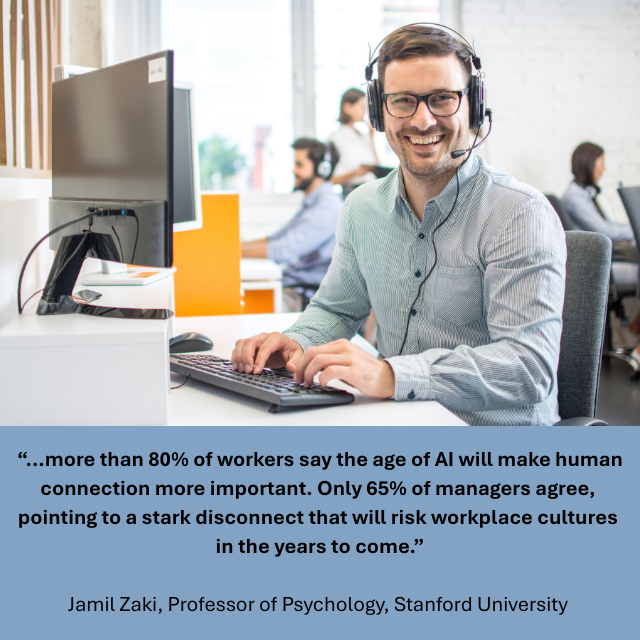
Leaders today can track:
What those numbers don’t show on their own:
Analytics identify patterns. Emotional intelligence helps leaders interpret them responsibly.
Without empathy, data lacks impact.
With empathy, and the right support systems, it becomes actionable.
This is where organizations often need help: not collecting more data, but equipping leaders to use it effectively through the right mix of training, documentation, and knowledge systems—an area where MATC Group partners closely with teams.
If technology is the infrastructure of modern work, emotional intelligence is the interface between leaders and people.
Emotionally intelligent leaders consistently demonstrate four key behaviors:
Data might say a team is behind on deliverables. An emotionally intelligent leader doesn’t simply escalate pressure. They explain:
This reduces fear and increases ownership. MATC Group helps organizations design communication frameworks and documentation that give leaders the tools to provide this level of clarity consistently. Clear, structured communication doesn’t just happen, it’s designed. Organizations that invest in documentation, messaging strategies, and leader enablement see measurable communication improvements.
A drop in productivity may not be a performance issue. It may reflect:
Leaders who balance analytics with empathy look beyond the metric before reacting to it. This is where instructional design and training matter. When leaders are trained to interpret signals, not just react to them, outcomes improve across teams.
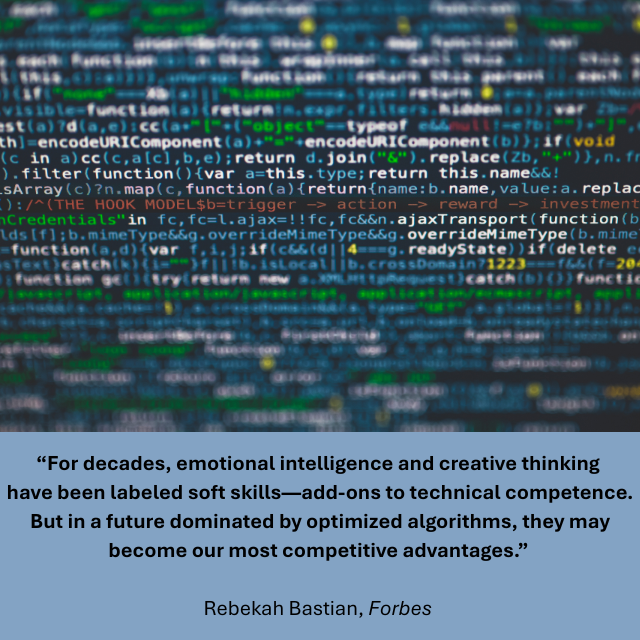
In AI-supported environments, leaders have more visibility into individual and team performance. The risk is using that visibility only for oversight.
Emotionally intelligent leaders use insights to ask better questions:
The goal shifts from monitoring to enabling.
Organizations that build strong knowledge management systems make this easier. Leaders have access to consistent information, clear processes, and shared context, so conversations are grounded, not reactive. This is a core focus of MATC Group’s knowledge management approach: ensuring leaders and teams are aligned through accessible, reliable information.
Digital workplaces move fast. AI accelerates expectations. Hybrid teams create communication gaps. Leaders set the emotional tone. When they respond to challenges with steadiness, clarity, and respect, teams mirror that behavior. That stability is often more impactful than any system upgrade.
Eighty percent of organizations say efficiency is a primary objective of their AI initiatives. Yet the companies seeing the most value from AI go further, prioritizing growth and innovation alongside efficiency. That distinction matters because efficiency alone doesn’t drive performance. People do.
In traditional workplaces, leaders relied on proximity to read a room. In digital environments, those cues are weaker.
Leaders may not see:
AI tools can summarize conversations, flag trends, and highlight risks. AI cannot replace human interpretation of emotion, morale, and trust.
The more work becomes mediated by technology, the more leadership must be supported by intentional systems: training, documentation, and communication frameworks that keep people aligned. MATC Group helps organizations build these systems so leadership effectiveness scales alongside technology adoption.
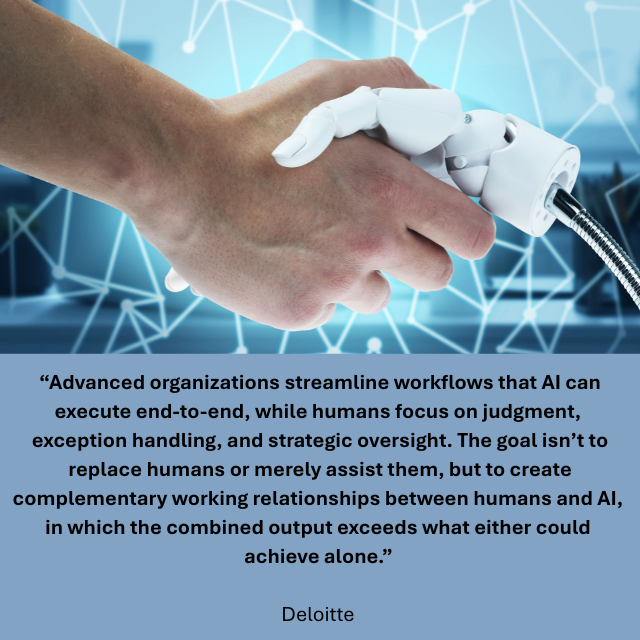
Organizations can’t assume emotional intelligence develops automatically with experience. It needs to be cultivated as deliberately as technical skills.
How organizations can support leaders
What leaders can do individually
Organizations that do this well improve adoption, performance, and resilience. MATC Group sees this gap frequently: leaders are expected to navigate complex, data-rich environments without structured support to do so effectively.
Technology continues to evolve. Dashboards will get smarter. AI will grow more capable. Metrics will become more detailed. But leadership effectiveness will still hinge on one timeless factor: how people feel when they work with you.
Emotional intelligence is the bridge between information and impact. It turns data into understanding, and understanding into trust.
At MATC Group, we help organizations build that bridge—through training, documentation, and knowledge systems that align people, processes, and technology, so leaders can turn insight into action with confidence.
Because in the digital age, empathy isn’t separate from performance. It’s what makes performance possible.
Can’t make it to CLO Exchange Austin? You can talk with us at several upcoming events:
The Human Side of Technology: Why Tools Don’t Transform Organizations, People Do
Documentation in the Age of AI: Why Clarity is a Competitive Advantage
Leading Through the Storm: Emotional Intelligence in Crisis Leadership
Bastian, Rebekah. “Why Empathy Is More Important Than Control For Leaders In An AI-Driven Future.” Forbes. 4/28/25. Accessed 3/20/26. https://www.forbes.com/sites/rebekahbastian/2025/04/28/why-empathy-is-more-important-than-control-for-leaders-in-an-ai-driven-future
Lester, Toby. “AI Is Making the Workplace Empathy Crisis Worse.” Harvard Business Review. 8/20/25. Accessed 3/20/26. https://hbr.org/2025/08/ai-is-making-the-workplace-empathy-crisis-worse
“State of AI in the Enterprise: The untapped edge.” Deloitte. January 2026. Accessed 3/20/26. https://www.deloitte.com/us/en/what-we-do/capabilities/applied-artificial-intelligence/content/state-of-ai-in-the-enterprise.htm