
If you’ve ever started your morning determined to finish a project, only to find yourself three hours later clicking through old emails, reorganizing folders, and googling “how long do squirrels live?” you’ve met Squirrel Syndrome.
With constant alerts, meetings, and multitasking competing for our attention, staying focused on deep work can feel about as likely as a squirrel calmly walking past a pile of acorns and saying, “No thanks, I’m good.” But there’s hope. Let’s look at strategies to outsmart distractions and keep our mental paws on the task at hand.
It’s that instinctive, rapid shift in attention every time something shiny—or urgent—appears. It’s the reason you open Slack “just for a second” and end up in a 20-minute side conversation about lunch, someone’s dog, and a spreadsheet you didn’t even know existed.
In knowledge work, where success depends on thinking, creating, and problem-solving, Squirrel Syndrome isn’t harmless. It:
Basically, you end up with a yard full of half-buried acorns and no memory of where any of them are.
A CareerBuilder survey about productivity killers at work found that some of the biggest culprits are:
These distractions negatively affect organizations in several ways, including:
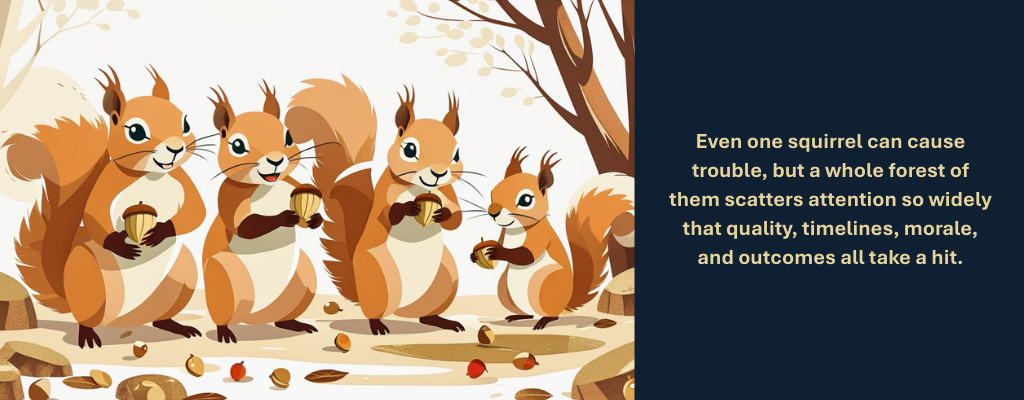
One squirrel darting through your day is manageable. A whole forest of them, each waving a different “urgent” acorn, scatters attention so widely that quality, timelines, morale, and outcomes all take a hit.
Our brains are wired for novelty and reward, two things the modern workplace provides in abundance. Every notification offers a hit of dopamine, and every “quick check” feels productive. But beneath the surface:
The result? We mistake busyness for productivity and call it multitasking. In reality, we’re squirrels trying to carry twelve acorns at once and dropping half of them along the way.
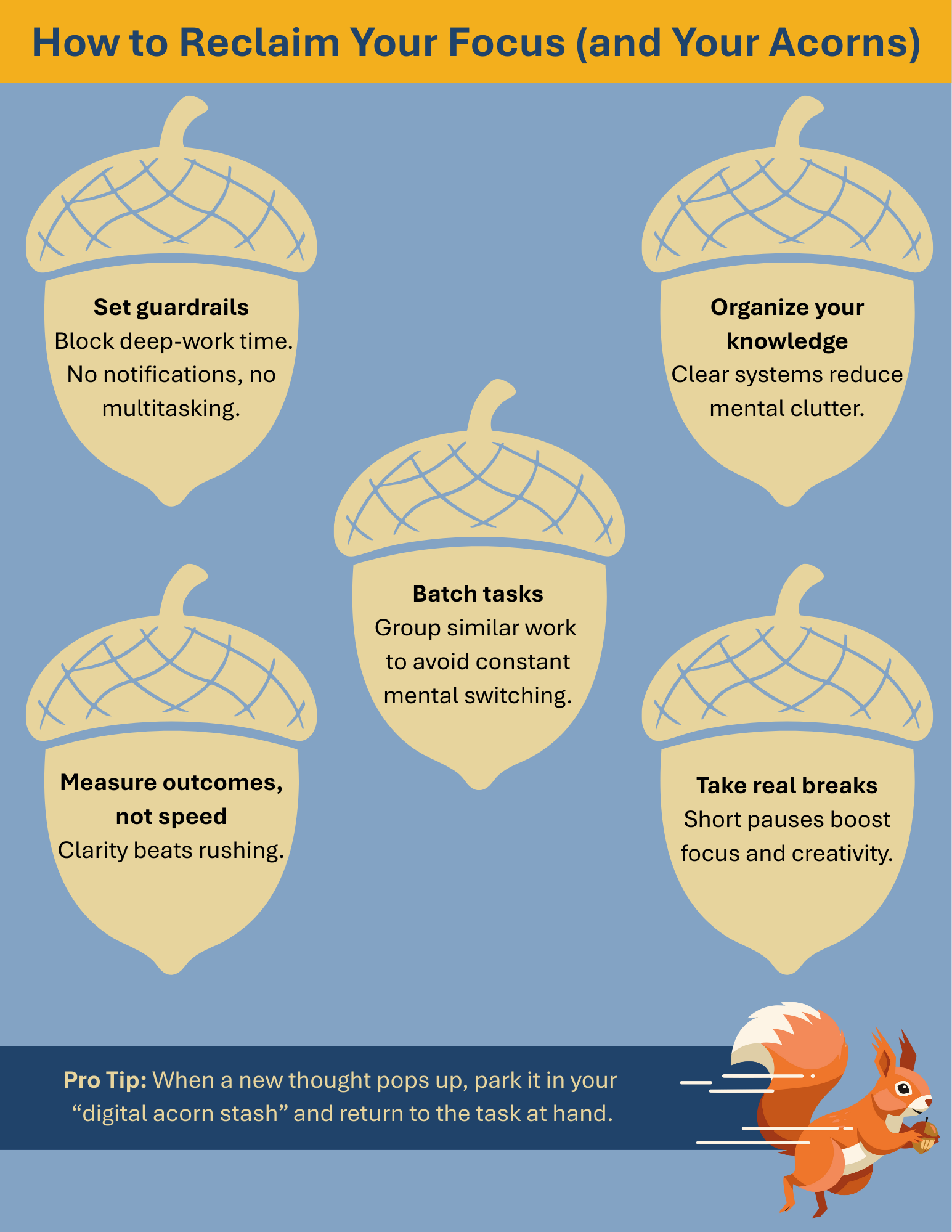
You can’t eliminate distractions entirely, but you can design your environment and habits to make focus easier.
Try these strategies:
Pro tip: If your brain starts bouncing between tasks, jot down the new thought somewhere safe (your digital acorn cache) and get back to what matters.
Leaders set the tone. When leaders model focus, respect boundaries, and communicate priorities clearly, it signals to the team that deep work is valued, not just constant motion. Practical steps include:
A calm leader creates a stable environment. A frantic one just sends the whole team scurrying in different directions, clutching random acorns and hoping for the best.
Squirrel Syndrome isn’t a personal flaw, but a byproduct of how modern knowledge work is structured. Don’t rely on more discipline as a cure. Implement better systems, clearer priorities, and realistic expectations.
So, the next time your attention darts from project to ping to podcast, pause. Take a breath. Focus on one nut at a time. You’ll get a lot more done, and spend far less time wondering why you’re holding an acorn you don’t remember picking up.
From Fear to Focus: Don’t Wait to Conquer Procrastination
Strategies for Managing Noise While Working From Home
Reducing Cognitive Load with Better Documentation: Lessons from I-O Psychology