
In conversations about modern training and development, adaptive learning and personalized learning are often used interchangeably. They sound similar, they aim for better learner outcomes, and they both promise a more tailored experience.
But they are not the same thing. Confusing the two can lead organizations to invest in the wrong tools, set unrealistic expectations, or design learning experiences that don’t actually solve the problem they were meant to address.
Understanding the difference matters because each approach serves a different purpose, relies on different inputs, and delivers value in different ways.
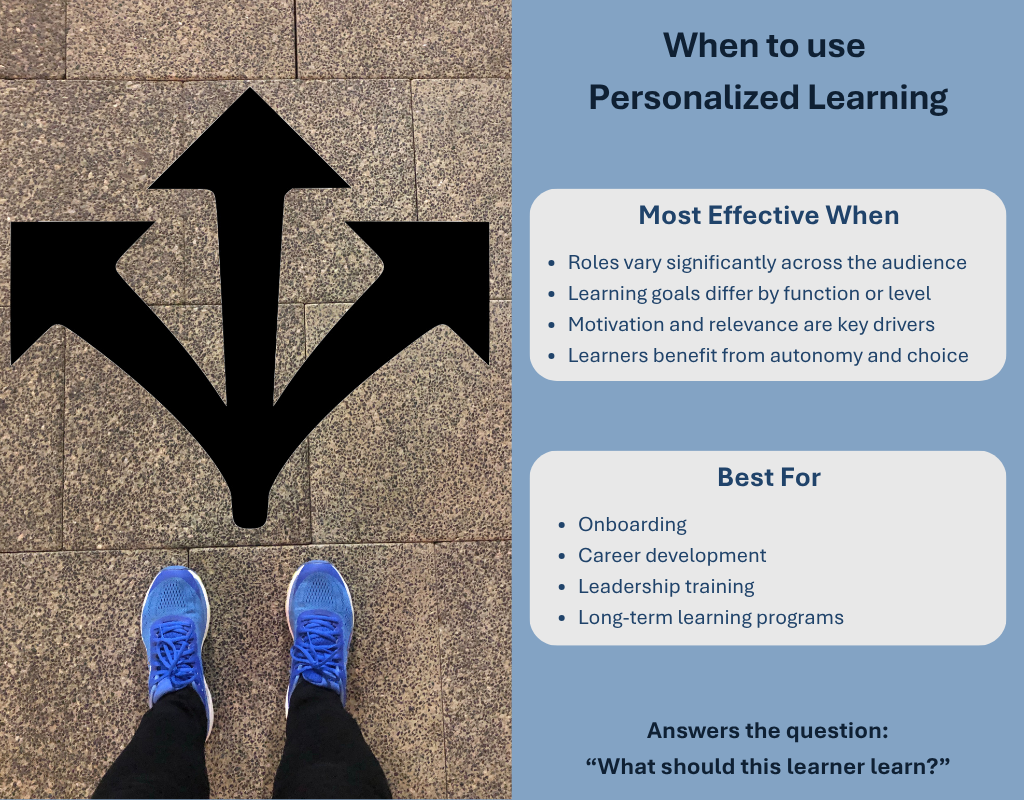
Personalized learning is intentionally designed around the learner. It uses known information about a person to shape their learning experience before they ever begin.
Personalized learning answers the question: “What should this learner learn?”
Personalization typically considers factors such as:
In a personalized learning model, the experience may vary from one learner to another, but those variations are planned in advance.
Examples of personalized learning include:
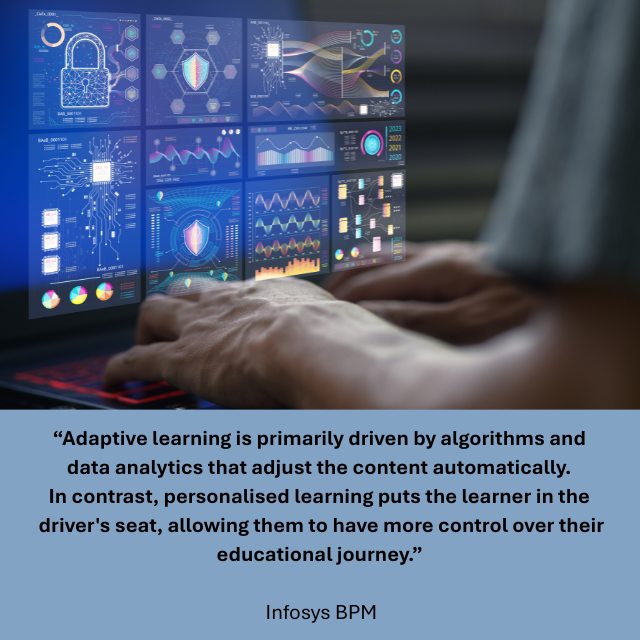
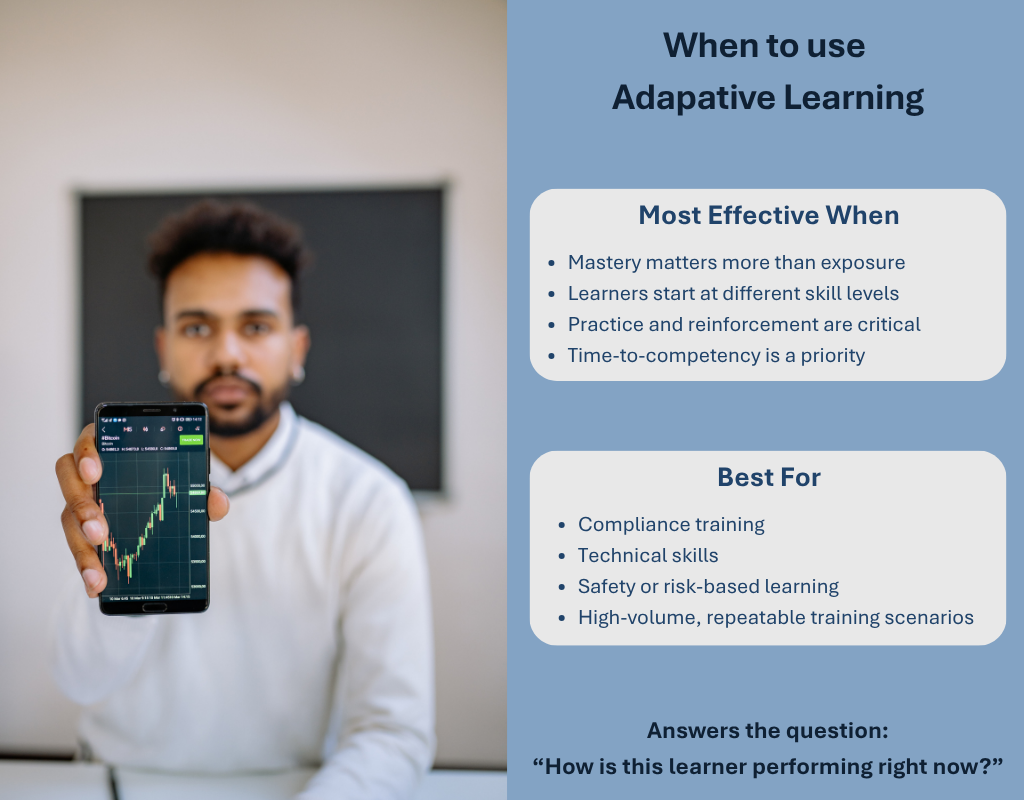
Adaptive learning responds to the learner as they interact with the content. Instead of relying only on predefined paths, adaptive systems use performance data to make real-time adjustments.
Adaptive learning answers a different question: “How is this learner performing right now?”
Adaptive learning may respond to:
Based on that data, the system may:
While both approaches aim to improve learning outcomes, their mechanics and use cases differ.
Personalized learning is about fit:
Adaptive learning is about feedback:
Problems arise when organizations expect one approach to behave like the other.
Common misalignments include:
Without clarity, teams may end up with sophisticated platforms that deliver minimal improvement.
Personalized learning is most valuable when the goal is relevance, not uniformity. When different roles, goals, and motivations shape how people engage with content, personalization helps ensure the experience feels meaningful, flexible, and aligned to what each learner truly needs.
Adaptive learning is designed for situations where progress depends on proving competence, not just completing content. When learners need targeted practice, real-time adjustment, and efficient skill-building, adaptive approaches help close gaps faster and more effectively.
The most effective learning ecosystems don’t treat adaptive and personalized learning as competitors. They use them together.
A strong approach might include:
When these systems work together, learning becomes both relevant and responsive.
Adaptive learning and personalized learning solve different problems; the former adjusts to performance, while the latter aligns to purpose. Organizations that understand the distinction make better design decisions, set clearer expectations, and create learning experiences that actually support growth instead of just promising it.
In the end, what matters is not the technology itself, but whether it drives measurable outcomes—faster time to competency, stronger performance, and clear impact on business results. That’s where MATC helps align learning strategy, instructional design, and knowledge systems to real business goals, ensuring that every solution is built to deliver results, not just content.
Can’t make it to CLO Exchange Boston? Contact us today, or talk with us at upcoming events:
From Learning Analytics to Action: Turning Feedback into Performance Improvement
Unlocking Potential: The Power of Personalized Training
When Training Meets Technology: Designing Learning for Real Humans
“Adaptive Learning vs. Personalized Learning: A Guide to Both.” Infosys BPM. 9/19/24. Accessed 4/27/26. https://www.infosysbpm.com/blogs/education-technology-services/adaptive-learning-vs-personalized-learning-a-guide-to-both.html