
There’s a familiar pattern in many organizations. A leader identifies a problem, requests training, and expects improvement to follow. The training is built quickly, rolled out broadly, and completed on schedule. On paper, everything looks successful. In practice, performance often stays the same.
The issue is rarely a lack of effort. It is a lack of alignment. When Learning and Development (L&D) operates reactively instead of strategically, training becomes disconnected from the realities of how work gets done. That disconnect is exactly why Training Needs Analysis (TNA) is no longer optional. It is the foundation for making learning relevant, targeted, and measurable.
That urgency is only increasing. On average, nearly 40% of existing skill sets are expected to change or become outdated between 2025 and 2030. The pace of change is no longer gradual, which means assumptions about what employees need to know become outdated just as quickly.
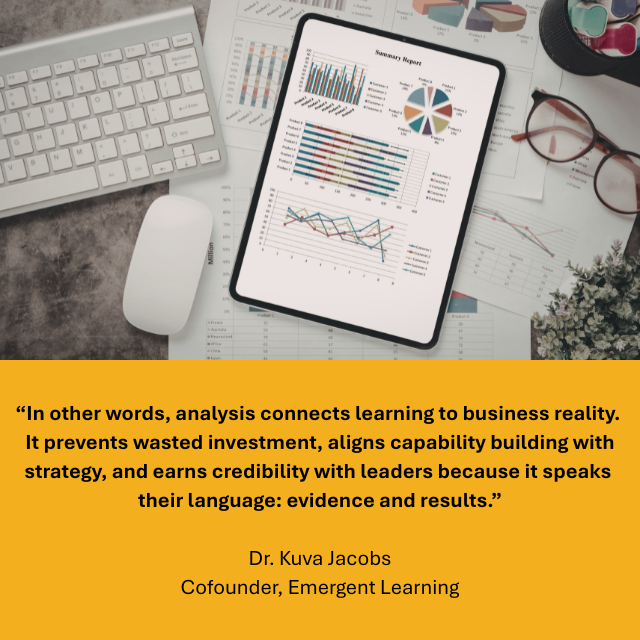
When organizations move directly from problem to training, they tend to rely on assumptions. Those assumptions may be informed, but they are still guesses. Over time, those guesses create friction across the organization.
Training content often drifts toward general knowledge rather than addressing specific performance gaps. Employees quickly recognize when training does not reflect their day-to-day responsibilities, which leads to lower engagement and reduced retention. Even when individuals do absorb the material, inconsistent application across teams creates variability in performance, making it difficult to standardize outcomes.
Perhaps most importantly, the connection between training and business results becomes unclear. Leaders struggle to answer a simple question: Did this training actually improve anything? Without that visibility, training is seen as an activity rather than an investment. This is not a minor issue: 64% of employers now identify skill gaps as the single biggest barrier to business transformation. When organizations skip analysis, they are not just risking ineffective training, they are slowing down their ability to adapt and compete.
The result is a quiet but persistent issue. Employees complete training because they are expected to, not because it helps them perform better. Over time, that erodes confidence in learning initiatives and contributes to what many organizations recognize as training fatigue.
In many organizations, L&D teams are brought in after key decisions have already been made. A process changes, a new system is introduced, or a performance issue surfaces, and the immediate response is to request training. The intention is to act quickly, but speed often replaces understanding.
Without time to properly diagnose the issue, L&D teams are asked to develop solutions based on limited context. The focus shifts to building content efficiently rather than ensuring it addresses the right problem. This leads to broad, one-size-fits-all training that attempts to cover every possibility but rarely solves the specific challenge at hand.
Over time, this dynamic creates a cycle. Business leaders continue to request training as a solution, and L&D continues to deliver it, even when training is only part of the answer. The organization becomes very good at producing courses, but less effective at improving performance.
It is a subtle shift, but an important one. When L&D operates in this mode, it becomes a responder to requests rather than a partner in solving business problems.
A modern TNA is designed to break that cycle. It focuses on understanding how work actually happens and where performance gaps truly exist.
This starts with examining performance data. Where are errors occurring? Where are delays happening? Which tasks consistently require rework or additional support? These questions move the conversation from general concerns to specific, observable issues.
From there, analysis moves to the task level. What decisions are employees making in these moments? What skills are required to perform those tasks effectively? This level of detail is what allows organizations to move beyond generic training and toward targeted support.
Audience segmentation also plays a key role. Not all employees experience the same challenges, even within the same role. A new hire, for example, may need foundational guidance, while an experienced employee may need support navigating exceptions or edge cases. Treating both groups the same often results in training that is too basic for one and too advanced for the other.
Finally, a strong TNA aligns learning with actual workflows. Training is designed to support real tasks, not abstract concepts, and it evolves over time through feedback and performance data. The result is learning that feels relevant because it is directly tied to the work employees are doing.
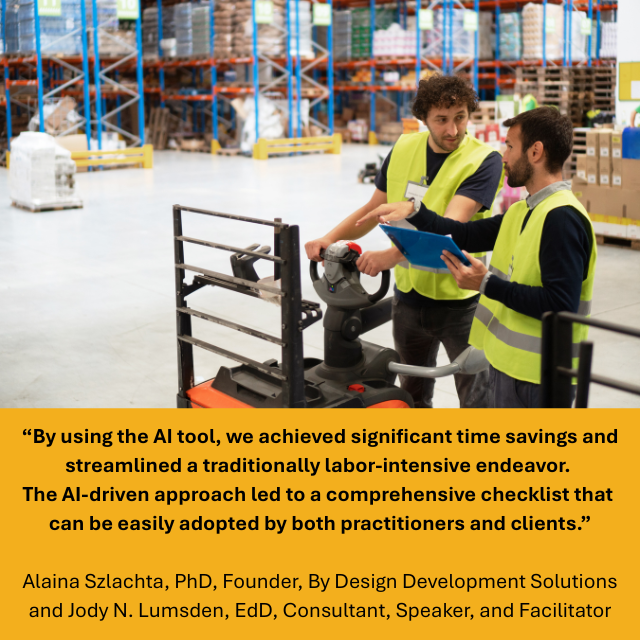
AI does not replace TNA, but it significantly enhances it. Traditional analysis methods rely on periodic reviews and limited data sets. AI expands both the speed and depth of insight.
With AI, organizations can analyze large volumes of performance data continuously rather than at fixed intervals. Patterns that might take weeks to identify manually can surface quickly, allowing teams to respond before issues escalate. This is particularly valuable in fast-changing environments where skill requirements evolve rapidly. And those changes are being driven by very specific forces. Advancements in AI are expected to transform 86% of information processing roles, followed by robotics and automation (58%) and energy-related technologies (41%). These shifts are reshaping which skills matter most.
AI also enables more precise identification of skill gaps. Instead of broadly categorizing employees as needing additional training, organizations can pinpoint specific areas where individuals or groups are struggling. This level of detail supports more targeted interventions, reducing unnecessary training while increasing effectiveness.
Another key advantage is personalization. AI can help tailor learning experiences based on an individual’s role, performance history, and current needs. Rather than assigning the same training to everyone, organizations can provide the right support to the right person at the right time.
Perhaps most importantly, AI supports ongoing reinforcement. Learning is no longer a one-time event. It becomes part of a continuous system that provides guidance, practice, and feedback within the flow of work.
When TNAs and AI are combined effectively, the focus of learning shifts in a meaningful way. The conversation moves away from content delivery and toward capability development. That shift also aligns with where the workforce is heading. Skills like AI and big data, networks and cybersecurity, and overall technological literacy are among the fastest-growing areas of demand. Organizations that focus on capability, not just content, are better positioned to keep up. Instead of asking what training should be created, they begin to ask what employees need to do differently.
Business leaders look at where performance breaks down and how to support better decision-making in those moments. This shift leads to learning experiences that are more focused, more relevant, and easier to apply.
The impact is noticeable:
There is also a practical benefit that should not be overlooked: when training is targeted, there is less of it. Employees spend less time on unnecessary courses and more time applying what they have learned. That alone tends to improve engagement.
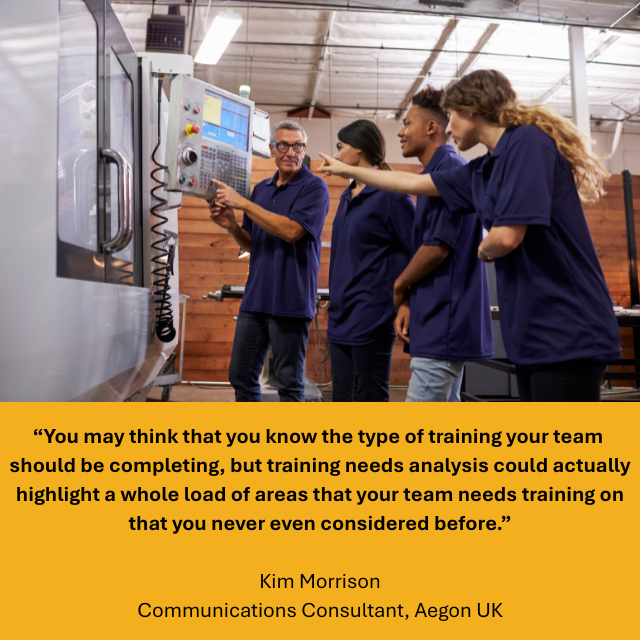
For L&D leaders, this shift is less about expanding responsibilities and more about redefining their role. The opportunity is to move earlier in the process and contribute to how problems are defined, not just how they are addressed.
This involves asking more diagnostic questions before committing to a solution. It means using data to guide decisions rather than relying on assumptions or past practices. It also requires designing learning as part of the workflow, ensuring that support is available when and where it is needed.
In this model, L&D becomes a partner in performance. The focus is not simply on delivering training, but on enabling better outcomes across the organization.
At MATC, we focus on helping organizations connect learning to performance in a practical, measurable way. Our approach combines TNA, AI-driven insight, and thoughtful design to ensure that learning initiatives address real business challenges.
We work with organizations to identify where performance gaps exist and why they occur. From there, we design targeted learning experiences that align with actual workflows, supported by documentation and knowledge systems that reinforce learning in real time. By integrating AI, we help organizations surface patterns, prioritize needs, and adapt learning as conditions change.
Just as importantly, we help organizations measure the impact of their efforts. Training should not exist in isolation. It should contribute to outcomes that matter, whether that is improved efficiency, reduced errors, or stronger employee confidence in their roles.
This approach reflects a broader shift in how organizations think about learning. It is no longer about producing more content. It is about enabling better decisions, stronger performance, and more consistent results.
Training without analysis is guesswork. Training with analysis provides direction. When that analysis is supported by AI, learning becomes a system that evolves alongside the business.
With nearly 40% of skills set to change and most organizations already feeling the impact of skill gaps, the question is no longer whether to adapt, but how quickly and effectively you can do it. In an environment where change is constant, that kind of system is a competitive advantage.
Can’t make it to CLO Exchange Boston? Contact us today, or talk with us at upcoming events:
Mastering Learning Objectives Avoid These 6 Common Mistakes!
Designing Leadership Training That Sticks: Turning Potential into Performance
Building a Monster: A Case Study in Bad Training
Jacobs, Dr. Kuva. “Why a Training Needs Analysis is the Most Overlooked Step in Effective Learning Design.” LinkedIn. 10/19/25. Accessed 4/13/26. https://www.linkedin.com/pulse/why-training-needs-analysis-most-overlooked-step-effective-jacobs-mb4cc
Morrison, Kim. “What Training Needs Analysis Is And How It Can Benefit Your Organization.” 1/23/26. Accessed 4/13/26. https://elearningindustry.com/training-needs-analysis-benefit-organization
Szlachta, Alaina, PhD and Jody N. Lumsden. “Can Generative AI Help With Needs Analysis?” ATD. 7/16/26. Accessed 4/16/26. https://www.td.org/content/atd-blog/can-generative-ai-help-with-needs-analysis
“The Future of Jobs Report 2025.” World Economic Forum. 1/7/25. Accessed 4/16/26. https://www.weforum.org/publications/the-future-of-jobs-report-2025/digest