
This is the second post in The Human Side of Technology series.
Artificial intelligence (AI) is moving faster than most organizations can explain it.
New tools appear overnight. Interfaces change without warning. Processes that once took weeks are now automated in seconds. Leaders are energized by the possibilities, while teams struggle to keep up.
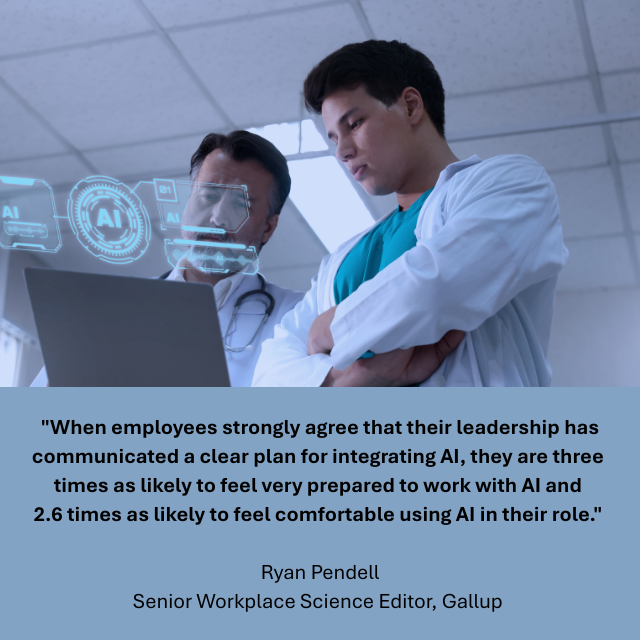
According to Gallup:
This creates a 14-point gap between organizations that are actively using AI and those that are providing clear standards to support its use.
When information changes faster than people can absorb it, documentation around AI usage becomes the calm in the storm. The sooner organizations provide clarity, the faster teams can move from uncertainty to confident adoption.
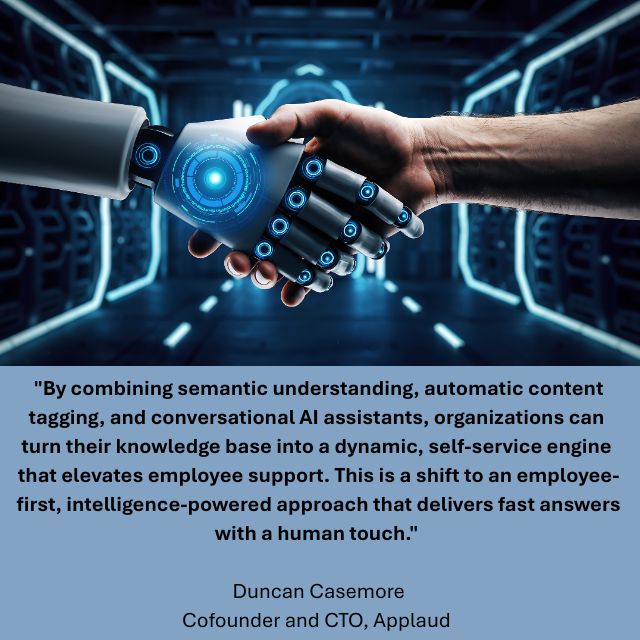
AI-driven systems promise efficiency, insight, and scale. But speed alone does not create confidence. In fact, rapid change often has the opposite effect.
When documentation is missing, outdated, or written only for technical audiences, people fill in the gaps themselves. That leads to:
This resistance is rarely about fear of technology. It is about uncertainty.
Clear documentation reduces that uncertainty by making complex systems feel understandable and safe to engage with.
In the age of AI, documentation does more than explain features. It builds trust.
Effective documentation answers human questions, not just system questions:
When documentation addresses these concerns clearly and consistently, it gives people permission to move forward with confidence.
This is where technical writing and knowledge management intersect.

Technical writing translates complexity into clarity. In AI environments, that translation is essential.
Strong AI documentation focuses on:
The goal is not to oversimplify. It is to make the system legible to the people who rely on it.
When users understand how AI fits into their work, they are far more likely to use it correctly and consistently.
AI systems evolve constantly. Documentation that lives in static files or forgotten folders cannot keep up.
Knowledge management provides the structure that allows documentation to stay relevant:
Without this foundation, even well-written documentation quickly loses credibility.
With it, organizations can adapt their knowledge as fast as their technology changes.
Organizations that invest in documentation during AI adoption see measurable benefits:
Clarity accelerates adoption because it removes friction. It turns AI from a black box into a shared capability.
In competitive environments, that matters.
Companies that explain their systems well move faster than those that rely on tribal knowledge and guesswork.
AI may be automated, adaptive, and data-driven, but the people using it are not.
They need context. They need reassurance. They need documentation that respects their time and intelligence.
When information is constantly changing, clear documentation acts as a stabilizing force. It helps people trust the tools they are asked to use and the organizations introducing those tools.
In the age of AI, clarity is not just a good practice. It is a strategic advantage.
Reskilling & Upskilling for 2026: What Professionals Should be Ready For
Knowledge Management’s Role in Change
The Human Side of Technology: Why Tools Don’t Transform Organizations, People Do
Casemore, Duncan. “Elevating Employee Support with AI-Driven Knowledge Search.” Applaud. Accessed 1/22/26. https://www.applaudhr.com/blog/digital-transformation/elevating-employee-support-with-ai-driven-knowledge-search
Ledezma, Christine. “The Vital Role of Technical Writers in Successful AI Implementation.” LinkedIn. 3/17/25. Accessed 1/22/26. https://www.linkedin.com/pulse/vital-role-technical-writers-successful-ai-christine-ledezma-txv2e
Pendell, Ryan. “AI Use at Work Has Nearly Doubled in Two Years.” Gallup. 6/16/25. Accessed 1/22/26. https://www.gallup.com/workplace/691643/work-nearly-doubled-two-years.aspx