Communication is constantly evolving. Now, a bold new standard has emerged, one that promises to make documentation universal, intuitive, and (arguably) adorable.
Introducing the Emoji-Only Documentation Standard (EODS): the first global initiative to replace every word in your company’s policies, training guides, and SOPs with emojis.
Because who needs “clear language” when you have 


 ?
?
For decades, technical writers have struggled with challenges like “too many words,” “not enough visuals,” and “readers who never scroll past page one.” (Don’t feel bad about that. Even Mozart was accused of using “too many notes.”) The EODS aims to solve all that by removing the pesky barrier of language entirely.
No translation issues. No grammar debates. No arguments over Oxford commas.
Just pure, pictorial communication, direct from heart to screen.
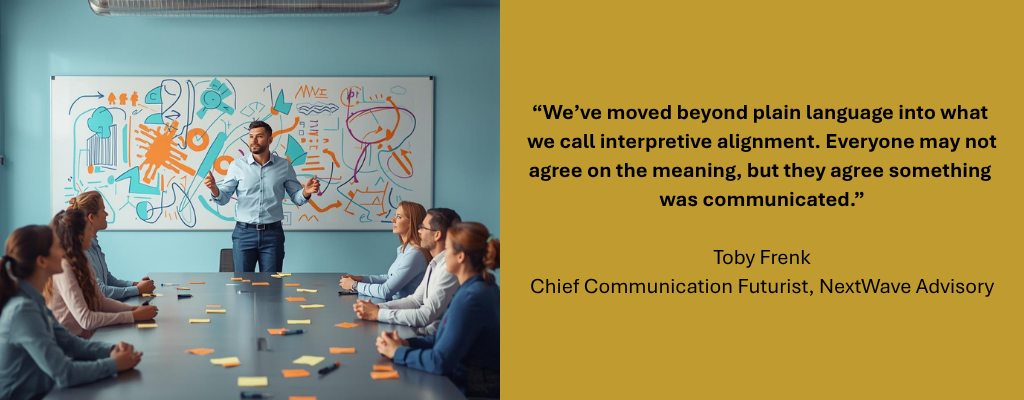
Every sentence, instruction, and procedure is translated into emoji sequences using a proprietary algorithm called EmotiFlow™, which analyzes tone, intent, and vibes. Yes, we’ve moved beyond Plain Language into a new era!
Examples:
Traditional: “Turn off the power before performing maintenance.”
Emoji Version: 


Traditional: “Submit your expense report by Friday.”
Emoji Version: 


Traditional: “Contact IT for assistance.”
Emoji Version: 


Elegant. Efficient. Mildly terrifying.
Early adopters have reported mixed outcomes:
 instead of
  on their safety posters.
 to represent “supply chain continuity,” which no one fully understands but everyone respects./10.
In short, the results speak for themselves, though no one’s entirely sure what they’re saying.
Of course, adopting the EODS requires a new generation of professionals. Technical writers will now serve as Certified Emoji Linguists, trained to balance nuance, context, and Unicode updates.
Job responsibilities may include:
 vs
vs  compatibility disputes are serious business).
 the new placeholder symbol or an HR incident?”).
 no longer considered neutral.)
Knowledge managers are thrilled—metadata has never been so expressive!
Instructional designers are already experimenting with emoji-based learning modules, turning compliance training into something that feels like a group chat you can’t escape.
Sample course titles:


 ”
”

 ”
”


 ”
”Early results show that learners are 200% more likely to react to lessons, though actual comprehension rates remain under investigation.
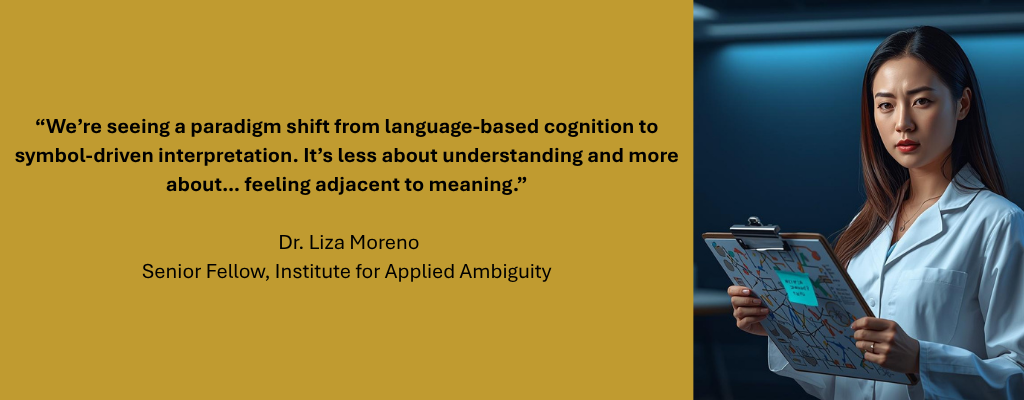
In knowledge management, the new emoji-first repositories are being hailed as “minimalist masterpieces.”
Everything is searchable by emoji keyword. For example, searching  retrieves “housekeeping,” “data cleanup,” and “please archive your 2019 project folders.”
However, one challenge remains: no one can tell the difference between “urgent” and “cute.”
While we at MATC Group fully support innovation in communication, we recommend a cautious approach before deleting your words entirely. Emojis are a wonderful supplement—but a poor substitute—for clarity.
After all, “Wash hands before handling chemicals” and “Raise hands before handling chemicals” look suspiciously similar in emoji form.
Documentation is supposed to reduce confusion, not start an interpretive guessing game.

The dream of a universal documentation language is noble, but let’s not forget why words work: they convey meaning precisely, contextually, and accessibly.
So this April Fool’s Day, let’s celebrate the humor in our work—the endless quest for clarity—and remember: if your new SOP starts with 
 , it might be time for a review.
And if your organization is tempted to chase the next big “innovation” in communication, it might be time for a quick reality check before the emojis take over entirely.
At MATC Group, we help organizations move past trends and build learning, documentation, and knowledge systems that actually improve performance, accelerate adoption, and deliver measurable results.
Because while might get attention, clarity is what drives real outcomes.