
This is the fourth post in our Risk & Resilience Series.
Disruptions rarely start as knowledge problems. They begin as system outages, staffing shortages, supply chain issues, or external crises. But very quickly, they become knowledge problems.
In high-pressure situations, the issue is not just the disruption itself. It is whether the organization can access the information needed to respond. When knowledge is scattered, response slows. When knowledge is structured and accessible, response stabilizes.
In stable conditions, inefficiencies in knowledge flow are frustrating. Under pressure, they are risky. Common breakdowns look familiar:
The technical problem may be unavoidable. The information chaos usually isn’t. Strong knowledge systems act as continuity stabilizers. Even when systems are strained, information remains accessible, current, and usable. That difference shows up quickly in how teams respond.
Knowledge silos rarely form on purpose.
In everyday work, people bridge these gaps through conversation. In a crisis, those bridges don’t hold. If knowledge is fragmented, teams hesitate. If it is centralized and structured, they move.
Resilient organizations treat knowledge as part of how work gets done, not as a side effort. That shows up in a few key ways:
This kind of alignment is intentional. It requires connecting documentation, communication, and workflows so that information supports decisions in real time.
When knowledge is structured and accessible, teams don’t waste time searching for answers—they act. This is what continuity looks like when information systems are built to support real-world pressure.
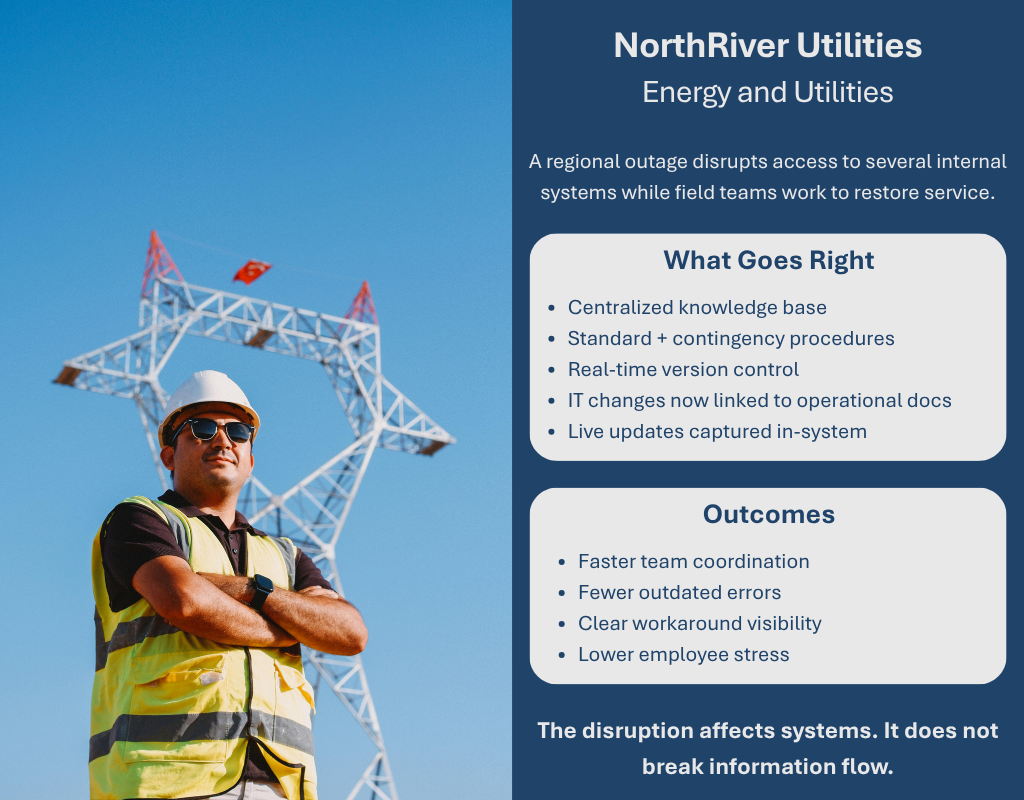
When knowledge is scattered or unclear, even capable teams struggle to respond effectively. This is what happens when information exists, but isn’t usable when it matters most.
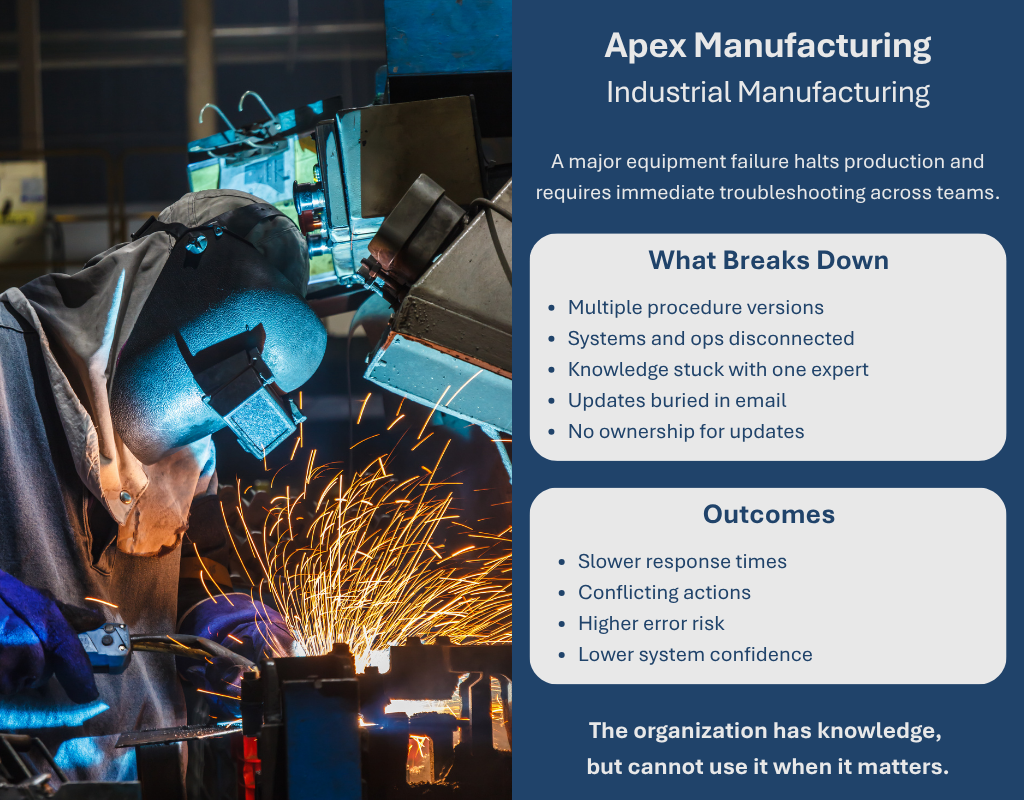
Documentation is often treated as support material. In practice, it functions much closer to infrastructure. Just as redundant systems support physical continuity, structured knowledge supports operational continuity. That requires ongoing attention:
Organizations that approach documentation this way are better prepared for disruption because their information holds up under pressure.
Most organizations recognize these problems. Fewer solve them in a sustainable way. Common challenges include:
Fixing this is not about adding more content. It is about building systems that make knowledge usable.
This is where MATC Group helps organizations take a more practical approach. By aligning technical documentation, training, and knowledge management systems, MATC helps teams move from scattered information to structured, reliable, and actionable knowledge. The focus is not just on creating content, but on making sure it works when pressure is highest.
A disruption does not erase what an organization knows. It reveals whether that knowledge is structured, current, and accessible. Centralized knowledge, clear ownership, and integrated systems protect continuity.
When systems falter, structured knowledge keeps the lights on.
If your organization had to respond to a disruption today, would your teams know exactly where to go for answers? If the answer is unclear, it may be time to take a closer look at how your knowledge systems are built—and whether they are ready to support real-world pressure.
Contact us today, or visit us at upcoming events:
Resilience in the Workplace: How Knowledge Management can Help Organizations Adapt to Uncertainty
How to Build a Change-Ready Organization: Creating a Sustainable Change Management Culture
Sustainability is a Knowledge Problem: Bridging the Gap Between Policy and Practice
“How Do You Quantify the Value of Enterprise Intelligence?” Bloomfire. 5/3/25. Accessed 4/3/26. https://bloomfire.com/resources/value-report