
Leading Through Uncertainty: The New Core Competency

Leadership has always meant navigating change, but today’s leaders are charting entirely new territory. Shifting economies, multi-generational workforces, and the fast rise of artificial intelligence (AI) are reshaping how organizations operate. Success now depends on leading with clarity, adaptability, and humanity — all at once.


The Economic Tightrope

The global economy has always been cyclical, but the pace and interconnectedness of today’s changes demand more proactive leadership. Inflation, evolving labor markets, and unpredictable supply chains make it nearly impossible to “wait out” uncertainty. Instead, resilient leaders:

  • Communicate frequently and transparently. Explain the “why” behind difficult decisions. When employees understand the context, they feel included rather than blindsided.
  • Plan for agility, not perfection. Scenario-based planning and living documentation help organizations shift faster.
  • Balance prudence with optimism. Share challenges honestly, but keep a long-term vision visible. Steady confidence inspires follow-through.

Clear communication during economic turbulence turns anxiety into alignment. People can adapt to tough news, but they can’t adapt to silence.
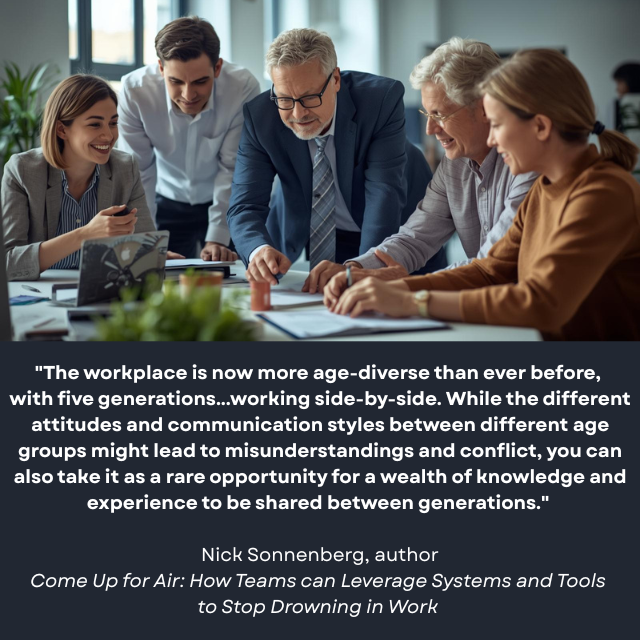
People of various ages in a meeting looking at papers. Caption reads: "The workplace is now more age-diverse than ever before, with five generations...working side-by-side. This age diversity among employees can be seen as both a blessing and a curse. While the different attitudes and communication styles between different age groups might lead to misunderstandings and conflict, you can also take it as a rare opportunity for a wealth of knowledge and experience to be shared between generations." -Nick Sonnenberg, author, Come Up for Air: How Teams can Leverage System and Tools to Stop Drowning in Work

Generational Shifts in the Workforce

Five generations are now working together, each with distinct motivations, expectations, and communication styles. That’s not a problem; it is potential energy waiting to be harnessed. Forward-thinking leaders:

  • Create two-way mentorships. Boomers offer institutional memory and strategic perspective, while Gen Z offers digital insight and social awareness.
  • Design flexible systems. Policies that accommodate different working styles (remote, hybrid, or on-site) help attract and retain diverse talent.
  • Build a culture of documentation. Institutional knowledge doesn’t have to retire when people do. Centralized knowledge bases keep expertise accessible across generations.
  • Recognize values diversity. One employee might seek stability; another seeks purpose. Modern leadership meets both needs through communication and respect.

The best teams thrive when leaders translate generational diversity into innovation instead of tension.


The AI Revolution

AI is no longer a futuristic concept, but is embedded in everything from email tools to data analytics. Leaders must set the tone for how AI fits into their strategy and culture. That means:

  • Positioning AI as an enhancer, not a replacement. Use automation to handle routine tasks so employees can focus on creativity and problem-solving.
  • Investing in upskilling. Train teams to work confidently with AI tools while understanding their limits.
  • Establishing ethical boundaries. Define what responsible AI use looks like within your organization. Clarity now prevents crisis later.
  • Encouraging experimentation. Small, low-risk pilots can reveal efficiencies and spark innovation.

Leaders who pair curiosity with caution will guide their organizations through AI’s evolution without losing the human element that makes work meaningful.
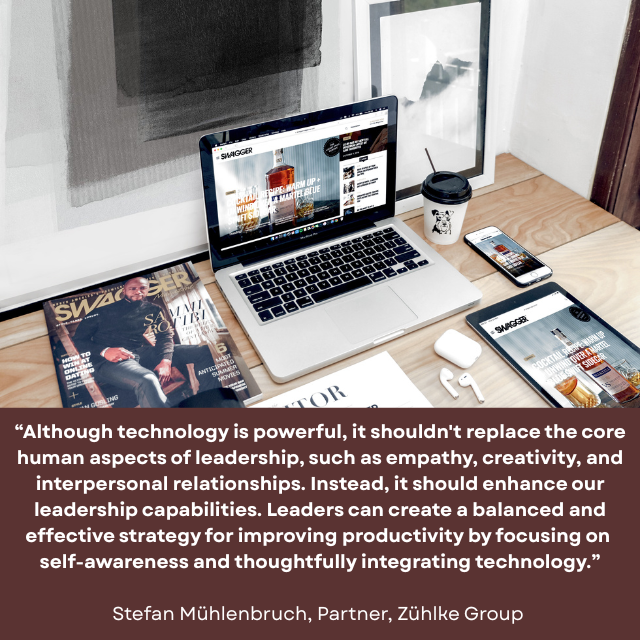
Top of desk holding a laptop, mobile phone, digital tablet, wireless earbuds, a drink, and a few magazines. There is a monitor on the wall. Caption reads: “Although technology is powerful, it shouldn't replace the core human aspects of leadership, such as empathy, creativity, and interpersonal relationships. Instead, it should enhance our leadership capabilities. Leaders can create a balanced and effective strategy for improving productivity by focusing on self-awareness and thoughtfully integrating technology.” -Stefan Mühlenbruch, Partner, Zühlke Group  

The Human Factor

Amid algorithms and automation, people still look to leaders for reassurance, connection, and direction. Leading through uncertainty requires:

  • Emotional intelligence. Recognize that fear and fatigue are normal responses to change.
  • Consistent presence. Even when the path isn’t clear, show up. Employees draw stability from visible leadership.
  • Shared problem-solving. Invite collaboration instead of dictating solutions. When people co-create the plan, they own the outcome.

Empathy and authenticity aren’t “soft skills”; they’re the glue that holds teams together when everything else is shifting.


The Path Forward

Uncertainty isn’t temporary — it’s the new baseline. The most effective leaders accept that truth and build cultures capable of thriving within it.

  • Embrace flexibility as a strategic advantage.
  • Celebrate learning as much as outcomes.
  • Keep communication channels wide open.
  • Lead with curiosity, courage, and compassion.

When leaders unite people, purpose, and technology, they don’t just survive uncertainty, they turn it into a catalyst for growth.

 
Related Blogs

Closing the Skills Gap: How Businesses can Predict and Address Workforce Needs

Creating a Culture of Knowledge Sharing: Best Practices for Organizations

AI-Generated Content: A Love-Hate Relationship

 
References

“You’re struggling to be productive as a leader. Can technology help you get back on track?” LinkedIn. Accessed 11/6/25. https://www.linkedin.com/advice/1/youre-struggling-productive-leader-can-technology-help-ftngc 

Sonnenberg, Nick. “5 Generations Are Now Working Together: Here’s How Smart Leaders Are Making the Most of It.” SHRM. 2/24/23. Accessed 11/5/25. https://www.shrm.org/executive-network/insights/5-generations-now-working-together-heres-how-smart-leaders-making 

 
Privacy Overview

This website uses cookies so that we can provide you with the best user experience possible. Cookie information is stored in your browser and performs functions such as recognising you when you return to our website and helping our team to understand which sections of the website you find most interesting and useful.